








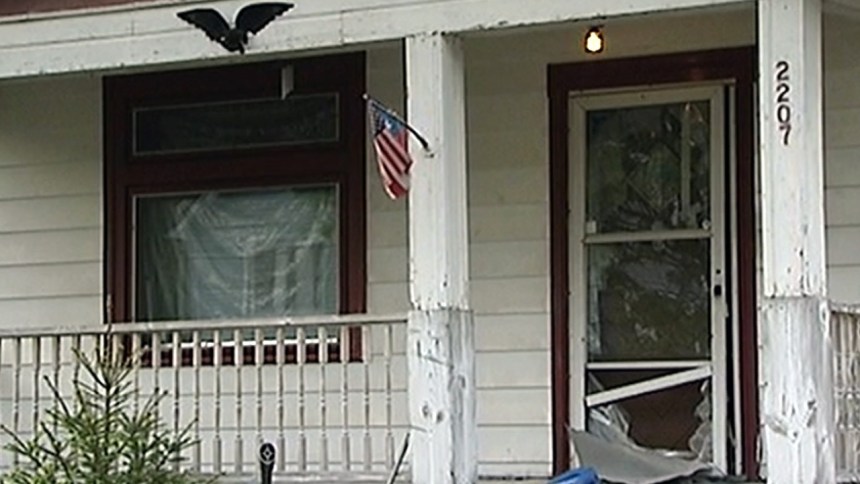
The nation celebrated the happy ending to a decade-long search for three missing women when Amanda Berry, Gina DeJesus and Michelle Knight were found May 6 in a west side neighborhood in Cleveland, Ohio.
As the healing begins for those three women, many Americans have been asking how could they have been held hostage for 10 years just three miles from where they were abducted.
This all happened in a working class, predominantly Hispanic community. One out of every five houses is vacant. Students in the area generally attend Lincoln-West High School, which has a graduation rate of just 46%, which falls below the Cleveland school district`s average of 56%.
Neighbors claim to have called police to report suspicious activity at the home of the women`s accused kidnapper, Ariel Castro; the Cleveland police department denies receiving such calls.
The community is asking questions about the intensity of the search for these women. Exchanges got heated at a town hall in Cleveland on May 9.
“I have a sister that’s missing. And it seems like [Cleveland’s] Second District [police zone] doesn’t care,” said one woman. “I`m not getting any help for our sister that’s been missing. None.”
But police are frustrated as well.
“There’s 2,900 missing persons a year,” said Police Commander Keith Sulzer. “I don’t have that many officers that I can follow-up one person, and I would love to. If I had them, I would gladly do it. But I don’t.”
What this story brought to light is an issue that goes far beyond Seymour Avenue in Cleveland. Across the country, missing people of lower socioeconomic status are less likely to get the resources and attention typically given to victims from better-off communities.
“We used to have many police centers here in the city of Cleveland when I was on the Cleveland city council, but those dollars were cut on the federal level,” Ohio state Sen. Nina Turner (D-Cleveland) told The Ed Show. “We’ve got to bring back the relationship between neighborhoods and police and make sure that we know that there are no throwaway neighborhoods.”
In 2012, it was reported that more than half the cities with the highest violent crime rates cut law enforcement budgets. Cities like Oakland, California, and Camden, New Jersey, where boots on the ground are seriously needed. “While it may be a good bumper sticker to say, ‘let’s cut taxes,’ that has real life effects,” Virginia Delegate Charniele Herring (D-46th) told The Ed Show. “And it affects families.” Republicans love to boast about cuts to the public workforce, but police, firefighters and teachers bear the brunt of budget cuts. These are public sector jobs, necessary to prevent crimes and respond to crimes. And they’ve been slashed in neighborhoods that need them the most. Turner predicts the issue will be a “big deal” in the 2014 midterm elections. “We have to decide in the city of Cleveland and in the state of Ohio, do we want to live in a city or a cemetery?” she said. “Do we want to live in a state that is vibrant for all folks or one that only takes care of the ultra-wealthy?
Steve Frank Recommended


