








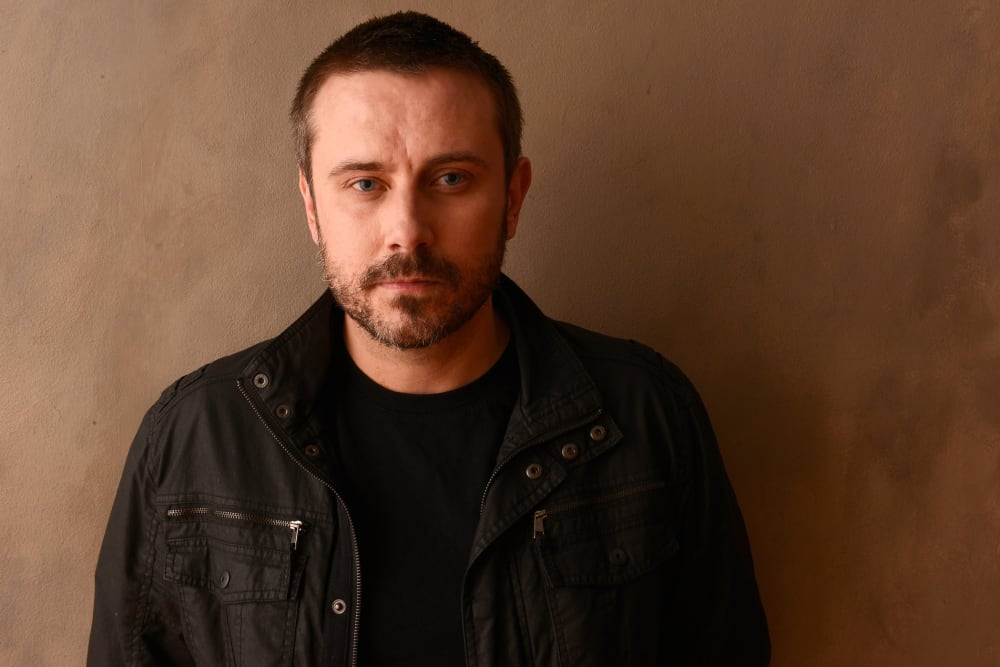
Investigative journalist Jeremy Scahill did not expect to take secret assassinations to Hollywood. Years of reporting on night raids and targeted killings in remote corners of Afghanistan, Yemen, and other fronts in the global war on terror became the film Dirty Wars, directed by Richard Rowley, which is up for an Academy Award for Best Documentary March 2. Scahill’s recent work has examined the overlap between the U.S.’ broad surveillance efforts and its checkered human rights record in the fight against terrorism. Scahill spoke to MSNBC about the film, what the drone program has done to America’s security, and how to repair our relationships abroad.
This interview has been edited and condensed
How are you feeling about the insanity of the Oscars?
The whole thing is surreal. I was just at this nominees’ luncheon where there’s this red carpet thing, and I walk in and the first person i see is Leonardo DiCaprio. At the lunch, I feel like I hit the lottery because I was seated next to Steve McQueen, the director of 12 Years a Slave, and he’s this incredibly deep, political guy, and we were joking that we were sort of the odd men out at this thing. In a sea of Christian Bales and Bonos and Leonardo DiCaprios and Amy Adamses and all these people, the two of us are sitting there discussing anti-colonialist movements in 1960s Africa. It was pretty cool.
If you look at the [documentary] field this year, three of the films are pretty serious political films. I mean, The Act of Killing is about the Indonesian genocide, The Square is about the uprising and the ongoing revolution in Egypt, and our film takes on drone strikes. We’re really proud to be in a category with all of those people. I would be happy for any of those films to win, and there’s a lot of collegiality. I think it’s always like that for the documentary division. We’re people that live in the real world, and want to ask these questions and try to present a challenging vision of what our reality looks like.
In the past year, there’s been more scrutiny on surveillance, on the drone program, on some of the really terrifying stuff being done in our name. What should people take away from this news and what questions should people be asking now?
I’m talking to you now as we see this new report from Human Rights Watch investigating this December 12 drone strike that turned a wedding into a funeral in Yemen, and it seems pretty clear that the majority if not all of the individuals killed in that strike were civilians. To put it bluntly, this is a horrifying massacre that was committed in Yemen, and yet what are the consequences going to be? Who’s going to be held accountable for this?
A lot of attention gets focused on drones and part of it is very rightly focused. There is something different about the world we’re living in now, because you have this ability to fly these planes that have missiles on them without having a pilot inside the actual aircraft. There are serious issues raised by it, but to me, the core issue we should be debating in our society – and Congress refuses to do this – is whether or not the U.S. should have assassination as a central component of its national security policy.
Basically what’s happened under President Obama is that any semblance of due process or of any kind of a law enforcement approach to the crime of terrorism has been replaced by NSA tracking of metadata, the compilation of kill lists, and people are convicted in a secret process by a handful of people inside the White House and then the drones are used as the executioner. We have totally abandoned the idea that terrorism is a crime and that we should try to confront the criminals that engage in it.
The Obama administration is asserting that it has the right and is right to kill people in a pre-emptive strike. That should be the subject of intense congressional scrutiny and intense debate in our media and in the country at large, and yet you see almost no real discussion of it.
I don’t for a minute believe that we would have this kind of deafening silence on Capitol Hill about the drone issue, about the assassination issue, if a Republican was in office. I think you would have the Democrats holding a series of hearings about this to examine the implications for our democratic process and for our national security. I think that’s pretty devastating commentary on the bankrupt nature of our partisan politics.
What was missing from the discussion of the latest debate over whether or not to kill an American citizen?
I believe they’ve already decided to kill this American, and I think they’re trying to kind of groom the American public to embrace this. They want to make sure that everyone knows that they’re being thoughtful, and they’re reviewing the legality of it, that all the t’s are crossed and the i’s are dotted, but I believe they already know where this individual is, they already have him in their target sights – or her – and that they are already committed to killing this individual.
I think they want to take this as an opportunity to reclaim the image of Obama as a reformer or as someone who is not Bush and Cheney business as usual, but its smoke and mirrors, at the end of the day. The U.S. military special operations forces and the CIA have been given incredible latitude from this white house to kill at will around the world, and that to me is a scandal and is something we should really be investigating.
I’ve come to the conclusion from traveling around the world and talking to people on the ground that we are actually making more new enemies than we are killing actual terrorists. Those new enemies aren’t necessarily terrorists, they’re people with a legitimate score to settle because they’re village was bombed or their husband was killed or their wife was killed or their children were killed. It may not happen in the next year or five years, but we will pay a price for this in the form of blowback, and I’m deeply concerned about that.
Expand a little bit on what you’ve found as you’ve traveled. What has the targeted killing program done to America’s standing in the world?
Under President Obama, I do think a lot of people around the world had this sense that he was going to hit the reset button on dialoguing with the Muslim world, and there was a lot of fanfare over the big speech he gave in Cairo. Halfway through his second term in office, I think the perception is that it doesn’t much matter who the President of the United States is when it comes to its national security policy, that it’s going to be American exceptionalism all the way. I think there are two factors at play here, when it comes to blowback or the creation of new enemies. One is institutional, the perception – that I think is true – that the US will support Israel at all costs over any other countries in that region, and on a micro level, when you hit people in drone strikes, or the night raids in Afghanistan, or the continuation of the rendition program, the fact that Guantanamo remains open. We have individuals who are going to be motivated to strike back at the United States, and the people who will pay the price for that are almost certainly going to be civilians. They’ll be American tourists, or it will be airplanes or public transportation. I’ve heard in multiple languages in different countries the same sentiment, which is “once my loved one was killed, I wanted to put on a suicide vest and blow myself up among Americans.” Not, “I want to attack the American military,” not, “I want to bomb the CIA.” “I wanted to blow myself up among Americans.” I don’t think people are just engaged in some rhetoric there. I think the impact of this is going to be very real on our society. What do we need to do to try and start turning this around? One of the interesting lessons from the Edward Snowden case is that I don’t believe for a second that President Obama or the U.S. Congress would be discussing issues of privacy and rights vis a vis NSA surveillance programs had Edward Snowden not taken those documents and given them to [journalists including] Laura Poitras and Glenn Greenwald. Whether the White House will admit it or not, Snowden deserves credit for forcing a debate in our society on very serious issues that cut to the heart of what kind of a nation we are towards our own people and towards the rest of the world. I think the same thing is true on the drone issue. I don’t believe President Obama would have given that speech in May at the national defense university if it wasn’t for human rights activists campaigning on this, a small number of journalists refusing to drop the story, and the fact that there were people dedicated to confronting the assertion that we could just drone bomb people in whatever country we want because we’ve determined in secret that they posed a threat. What we can do to start fixing things? I think that regardless of where people come from politically that it would be a workable solution right now to call for a moratorium on drone strikes and have a serious investigation into who we actually have killed with these strikes and whether or not it’s making us safer and whether it’s degrading our national security, that would be the one moment where I would put on a policy maker hat and say I wish congress would take that up. Also, we need to have a second coming of the Church committee, or something like it, where we investigate the institution of assassination as a part of US policy and on a personal level. Is there going to be a film component to what happens at First Look? What will it look like? I think one of the things we want to try and do at First Look and that the Intercept is to start working with filmmakers and videographers to try to tell stories in a way that resonates with a broader public. At the end of the day, when we were making Dirty Wars, we wanted to make a film that would be accessible to people even if they weren’t monitoring the news every single day. Because they’re busy with the daily grind because they’re working as a nurse or in construction and they don’t have time like you and I do as journalists to be totally invested in the news. Part of how we reach people is making very complicated stories digestible to people, and film is probably the best outlet for doing that.
Meredith Clark
Meredith Clark is a freelance writer and editor. She was previously a senior news producer for "Patriot Act with Hasan Minhaj," a reporter with MSNBC.com, the digital politics and culture editor at Glamour and a senior news and politics editor at Refinery29. She has written for Vulture, Rolling Stone, Self, Marie Claire, Cosmopolitan, The Daily Beast and Bustle. Recommended


