








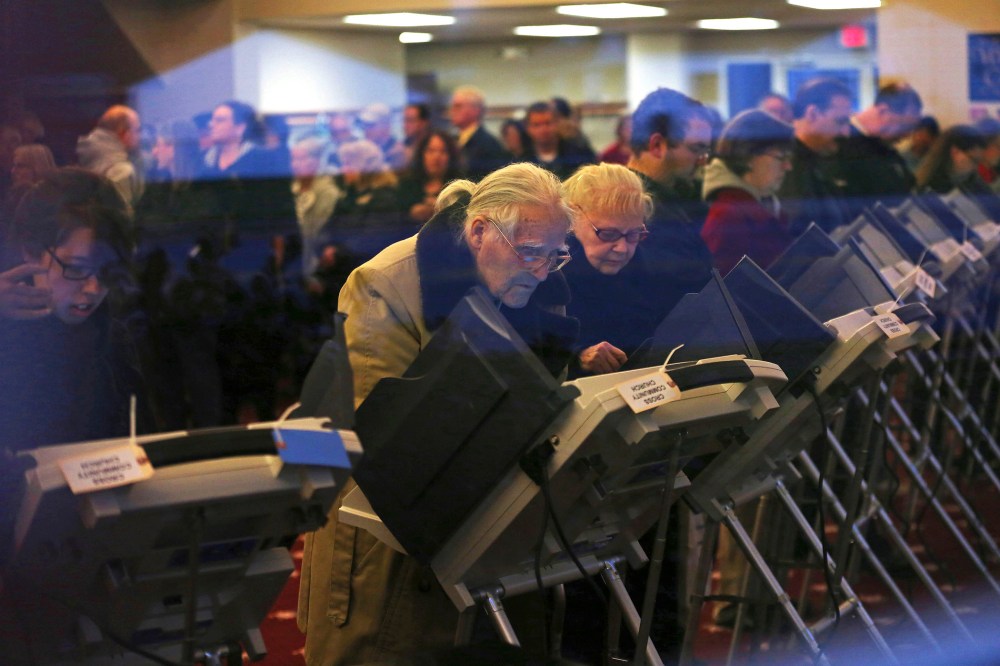
Gov. John Kasich of Ohio plans to sign a pair of restrictive voting bills passed this week by GOP lawmakers, a spokesman for the Republican governor confirmed to msnbc.
“He will sign them both, possibly later today,” said Rob Nichols in an email Friday morning.
The news takes the steam out of an effort by a coalition of voting-rights groups to pressure Kasich to veto the bills. It means opponents of the measures will have to rely on a potential legal challenge, whose prospects are uncertain. If left in place, the twin bills could have a real impact on turnout this fall and in 2016, especially among minorities.
At issue are two GOP-backed voting bills passed by the state legislature Wednesday night. One would cut six days from the state’s early voting period. Those six days are the so-called “Golden Week,” when Ohioans can register and vote on the same day—among the most effective ways of bringing new voters into the process. The other would make it far harder for voters to receive absentee ballots, and make it easier to reject absentee ballots if they’re missing certain information.
The bills’ impact on turnout, especially among minorities, could be significant. In 2012, 59,000 Ohioans voted during the Golden Week that’s being eliminated. Studies show blacks are far likelier than whites to use early voting and same-day registration.
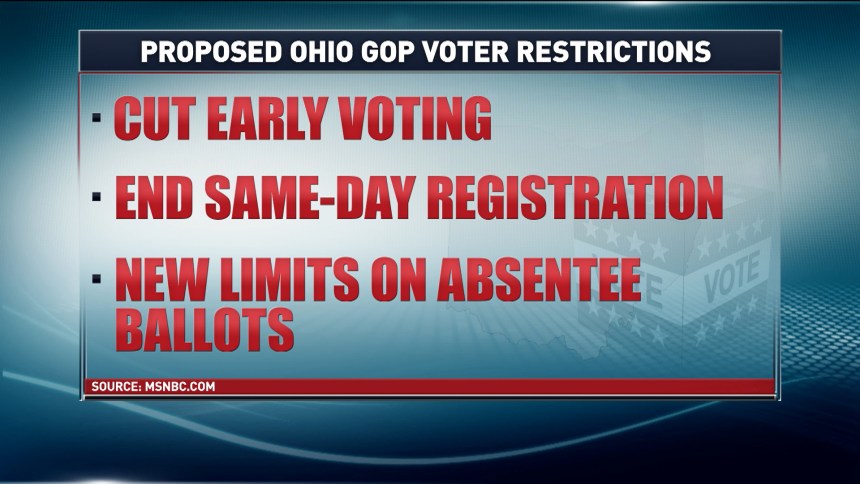
And 1.3 million Ohioans cast absentee ballots, after Secretary of State Jon Husted mailed them to every registered voter. Under the new bill, he’d be barred from doing that without approval from lawmakers. Nor could counties mail absentee ballots on their own, as many urban counties have done in the past.
Combined with a bill passed late last year that allows counties to have fewer voting machines on hand, the bills could also lead to much longer lines at the polls on Election Day both this year and in 2016. In 2004, Ohio was the poster-child for Election Day problems, with one Democratic study estimating 175,000-plus people left before casting a ballot.
Chris Redfern, the chair of the state Democratic party, has said Democrats plan to sue in federal court to stop the bills. “The party has never filed an action since 2005 that we have lost — ever,” said Redfern, a state representative, Wednesday night. But it’s difficult to gauge their chances of success this time around. A challenge to the new bills would likely be based on Section 2 of the Voting Rights Act, which bars racial discrimination in voting, as well the 14th and 15th Amendments to the U.S. Constitution, election lawyers said. None of those provisions have been used much in the past to stop the kinds of voting restrictions at issue here. But more broadly, as the election law scholar Rick Hasen has shown, the courts have been surprisingly willing to block the wave of voting restrictions passed by Republicans in 2011 and 2012. (One major success came in Ohio, where an October 2012 court ruling stopped an effort to cut early voting for everyone but military service-members.) That may suggest that courts are increasingly intolerant “of efforts to make it harder to vote for no good reason,” Hasen told msnbc via email.
Zachary Roth Recommended


