








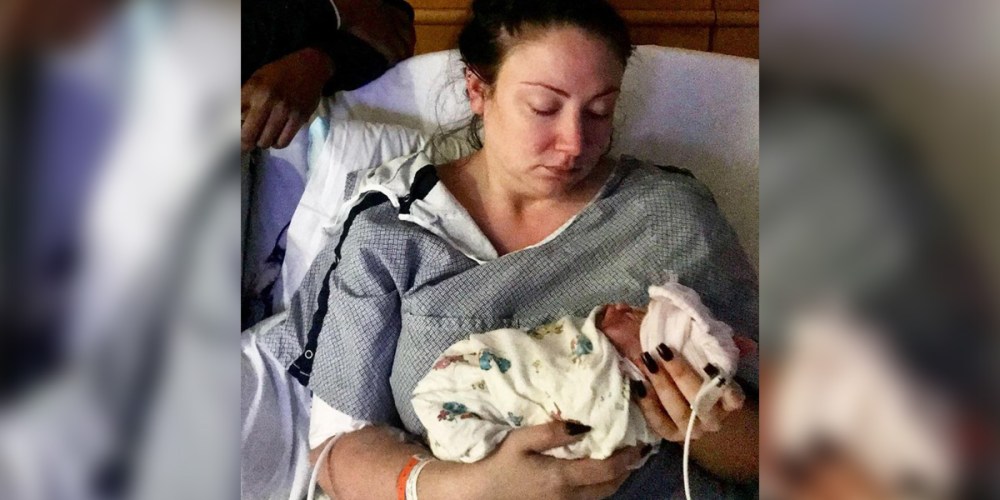
At 31 weeks pregnant, Elizabeth O’Donnell was decorating her home for Christmas last November when she realized she hadn’t felt any movement all day from her growing baby. She rushed to George Washington University Hospital in Washington, D.C., where she got the devastating news: Doctors could no longer detect a fetal heartbeat and she would have to deliver her baby still.
From her hospital bed, the 30-year-old first grade teacher at Watkins Elementary in Washington, D.C., updated her principal, who then reached out the D.C. Public Schools’ Leave of Absence Office. Due at the end of January, O’Donnell had originally planned to take the rest of the school year off using a combination of benefits, including the District of Columbia Public School system’s Paid Family Leave policy, the unpaid federal Family Medical Leave Act, and the sick days, vacation days, and holidays she had accrued.
She followed up with DCPS a week and a half later, saying that she would be taking only her pre-approved 8 weeks of paid family leave as she recovered from childbirth, then would return to the classroom.
“So here I am, naive, thinking, this is better for them,” O’Donnell said. “I’m coming back. I won’t be out for the rest of the school year.”
Instead, she was told that she was no longer eligible for the paid family leave benefit because she was “only caring for herself.”

“I felt as though I was being told that my daughter did not exist,” O’Donnell said of that moment. “And I will never have anybody tell me that my child did not exist.”
O’Donnell re-read the policy that governs the school system’s paid family leave and determined that there was nothing written in it that precluded her from taking her planned leave. Her friend introduced her to an employment lawyer.
“I said to him, ‘Look, if I’m wrong, I’m wrong. But all it says is ‘birth of a child,’ O’Donnell said of the policy. “It doesn’t say whether or not that child is living…”
While O’Donnell took unpaid leave under the Family Medical Leave Act for her postpartum recovery, her lawyer sent a letter to DCPS. The agency, she said, again denied her leave.
Full of anger, she posted a photo on Instagram of her in the hospital cradling the body of her daughter Aaliyah, which means “exalted” in Arabic and “risen” in Hebrew. In it, she described her grief, her painful labor and recovery, and her denial of paid leave by DCPS.
“DC government policy denies me paid family leave (8 weeks for postpartum recovery) because I cannot provide a birth certificate for my daughter,” O’Donnell wrote. “Unfortunately, I can provide her cremation papers though- but that makes no difference in their decision.”
Her Instagram post sparked outreach from other women whose pregnancies ended in stillbirth.
“So many other teachers went right back to work, working with children after losing their own child. Some women were able to get their paid leave, and shared that with me. Some women told me that they took a week off, but had no sick leave and had to go right back,” O’Donnell recalled. “And so to hear all these different stories, it’s just crazy to me that in this country, there’s not some universal or at least statewide [aid].” The state of paid family leave is patchwork across states, making the U.S. one of the only developed countries in the world that fails to ensure paid and family medical leave through a national policy. Fewer than 20 percent of states have enacted paid family and medical leave policies, and some of those have yet to take effect. Under the federal Family Medical Leave Act enacted in 1993, workers are granted up to 12 weeks of unpaid, job-protected family and medical leave. Most recently, the Biden administration flexed its commitment to extending paid leave via the $1.9 trillion Covid-19 relief bill known as the American Rescue Plan, which extends tax credits to businesses that offer paid leave to their employees through Sept. 30. But a permanent universal policy is still elusive. Now O’Donnell is back in her first grade classroom at Watkins Elementary, where she’s taught for seven years. She’s recovered from her labor complications, which included an epidural that aggravated scar tissue from a prior sports injury that left her struggling to get out of bed and unable to get into and out of the car. While she is still engaged in a months-long dispute with DCPS over her parental leave benefits, her outspokenness about her own experience is serving as a catalyst for changing policies around women and childbirth in her home city. “I was contacted by a few D.C. council members who were very interested in the story and wanting to know what happened and how they could help fix it,” O’Donnell said. To that end, Councilwoman Elissa Silverman spearheaded an effort to grant parents 10 days of paid leave for bereavement after a stillbirth or the loss of a child under 21. D.C. Mayor Muriel Bowser introduced that legislation and also signed an act to offer birth certificates for stillborn babies upon request — a bill that was in the works before O’Donnell’s loss, but regained momentum under her media spotlight. DCPS declined to comment but referred Know Your Value to the Office of the Deputy Mayor for Education. “Our hearts continue to go out to Ms. O’Donnell after the loss of her daughter,” said Deputy Mayor for Education Paul Kihn. “Recently, Mayor Bowser worked with the Council to pass legislation to provide District employees, including DCPS teachers, with expanded paid leave to grieve the devastating loss of a minor child or stillbirth.” O’Donnell said, “I feel like I am turning my anger into action,” She added, “And I’m very grateful that that is now in place for families that need it… but I keep saying that I need to stay true to my original argument here, and that is that the way that D.C. has this paid leave written makes it open to interpretation and people can decide: Yes this does include stillbirth, or no it does not, and what are we going to do about that? And that’s not something people seem to be ready to really talk about yet — which is why I will keep talking about it, because we need to be ready to talk about it.”
Erin Delmore Recommended


