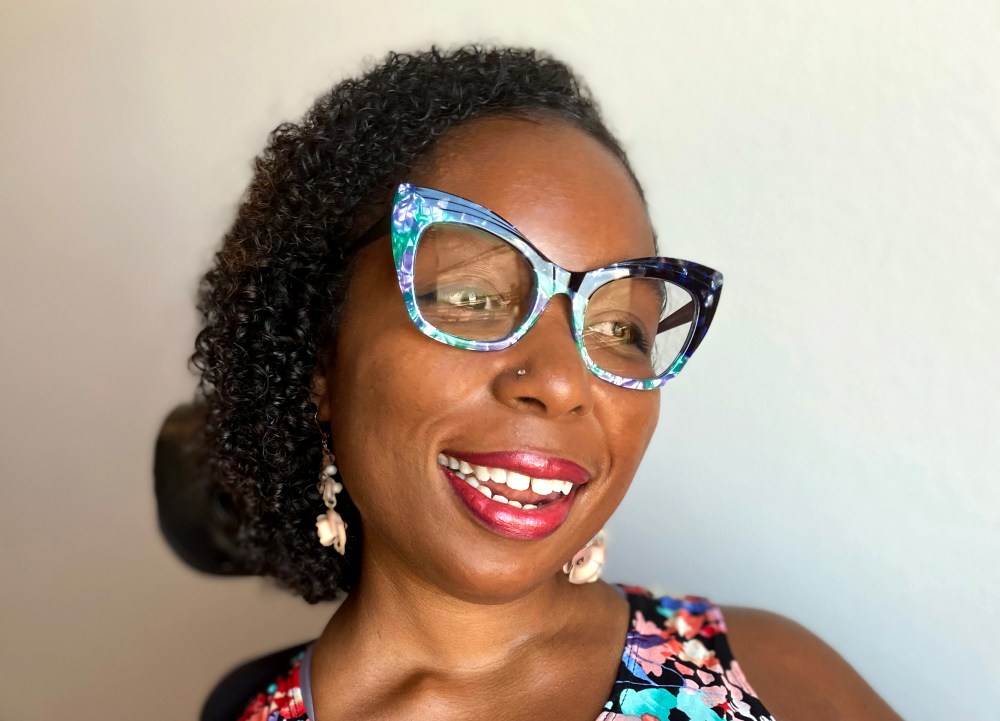
Andraéa LaVant wants you to know that she’s many things, a living snapshot of humanity’s vast kaleidoscope. She’s a Black woman. A native Midwesterner. A college graduate and business owner. A daughter, sister and friend.
LaVant is also among the estimated 61 million people in the U.S., according to federal data, living with a disability — in her case, a form of muscular dystrophy called spinal muscular atrophy, or SMA for short. The 37-year-old was diagnosed at age 2 with a genetic disease that, among other things, affects the central nervous system and voluntary muscle movement.
“I could feed myself, and write. But I grew up being pretty much dependent on people for everything,” says LaVant, an Iowa native raised in Louisville, Kentucky. “I used a walker and a wheelchair.” That didn’t stop her from riding the school bus, serving in student government or imagining she might one day become a writer, a la Toni Morrison and Zora Neale Hurston. “My parents did not put any limitations on my dreams,” she said.
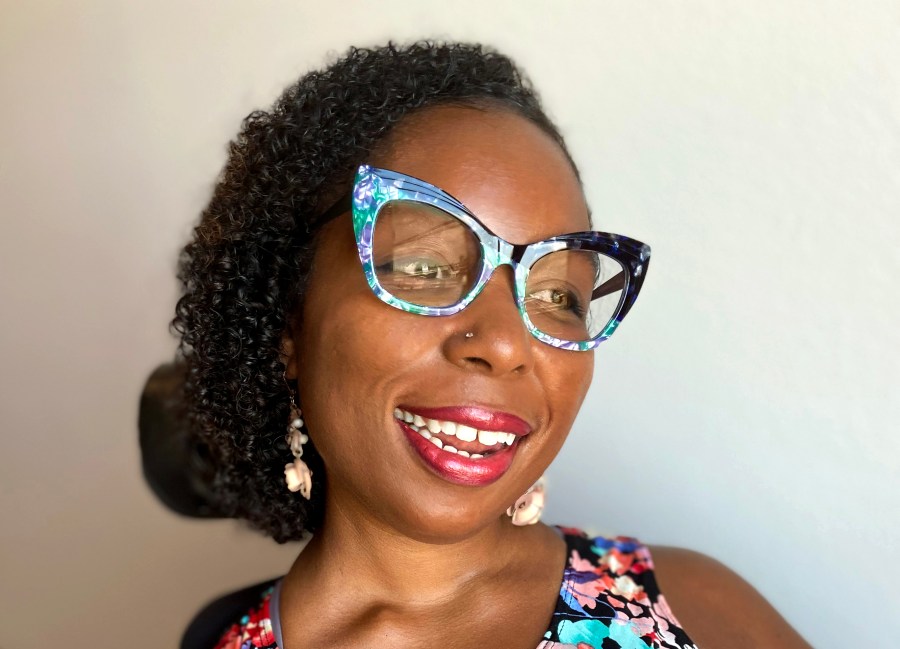
Today, LaVant is the founder and president of LaVant Consulting Inc., an Arizona-based social impact communications firm that specializes in helping brands “speak disability with confidence.”
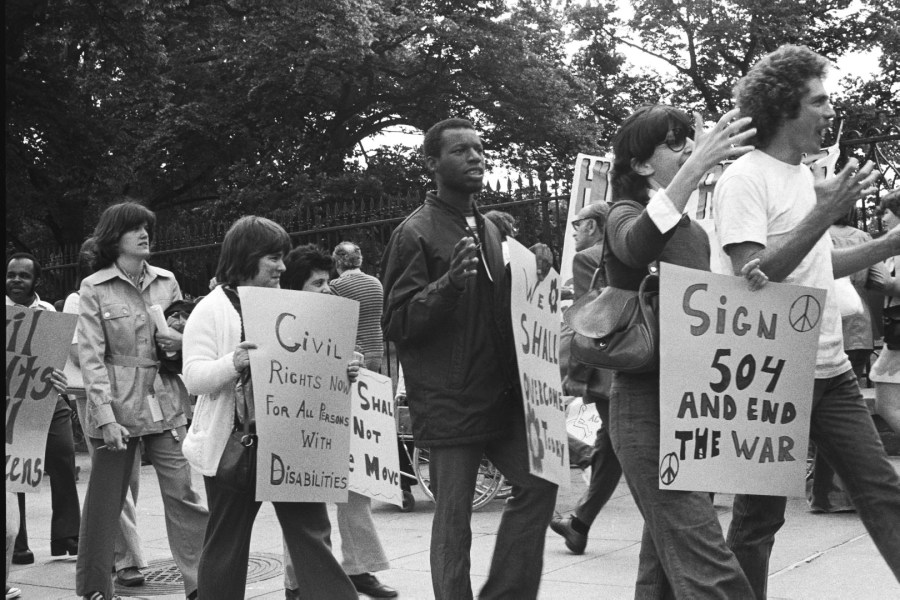
This year is the 30th anniversary of the Americans With Disabilities Act (or ADA), a comprehensive civil rights law for people with disabilities. LaVant is part of a long line of advocates who are reframing the way individuals with disabilities center themselves, and the way the larger society views them. Among the ways she’s executing this is via her current role as the impact producer for the feature-length documentary “Crip Camp,” now available on Netflix.
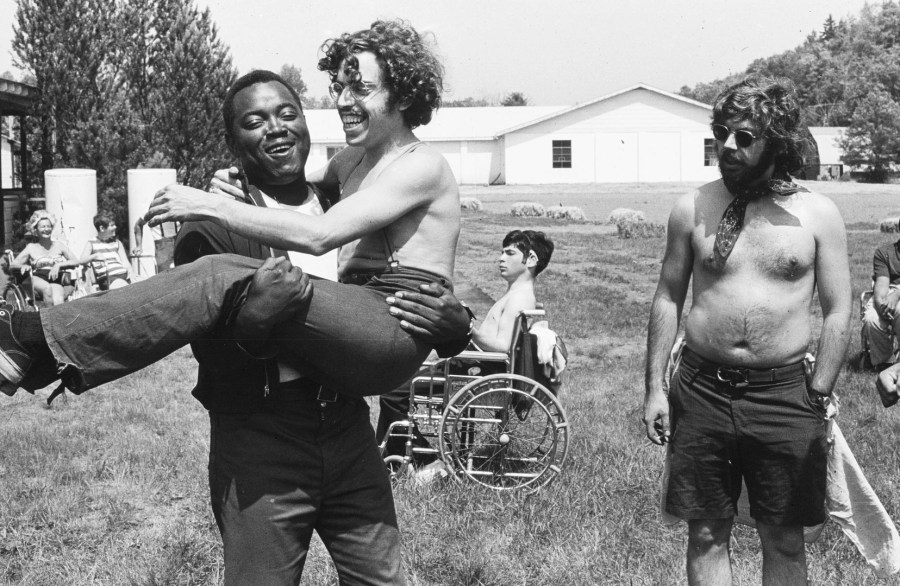
The film showcases Camp Jened, a ramshackle ’70s summer camp in upstate New York for teens with disabilities from varying racial and socio-economic backgrounds, and their pivotal roles as leaders, organizers and activists in the Disability Rights Movement. The documentary is co-directed by Emmy-winning filmmaker Nicole Newnham and Jim LeBrecht, a former camper and the film’s mixer. “Crip Camp” was produced by former President Barack Obama and Michelle Obama’s production company, Higher Ground.
“‘Crip Camp’ captures the complexity and humanity of living with disabilities, and it honors this community of young people who would go on to lead the disability rights movement,” Michelle Obama said in a statement provided to NBCBLK. “Their spirit and resilience reminded me of my father, a joyful man, quick with a laugh, who struggled with M.S. for much of his life. While his disability didn’t define who he was, it would be foolish to say it didn’t deeply impact him either. This film honors his story and so many others, and I’m proud of everyone who played a role in making it possible.”
LaVant is charged with leading the film campaign’s efforts to promote understanding of disability as a social justice issue and to build coalitions. She is intimately familiar with these issues as someone at the triple intersections of race, gender and disability — which she terms “another layer of being othered.”
“We have a lot of work to do as a society in terms of representation,” said LaVant, who has worked with programs that support youth and adults with disabilities, and other underserved populations for more than a decade. “I’ve always placed myself in the mainstream, and my goal is to infiltrate spaces that those with disabilities have never been before.”
Yet LaVant doesn’t sugarcoat the myriad physical, emotional and other challenges that run the gamut from health care costs to dating (“Men like my photo online but when we meet in person and they see I’m a disabled woman, they don’t call back”), to daily tasks. “I have a [nurse’s] aide for a couple of hours in the morning and at night. I have to trust people to put me to bed. I’m always nervous wondering if they will show up. Many days, I’ve had to sleep in my wheelchair. Nobody came.”
And when it comes to acceptance, she’s spent a lifetime battling perceptions, including in the workplace and even at church. “In the past, I spent a lot of time trying to overcompensate,” she said. “I didn’t want people to see my disability. I felt shame. I have felt self doubt and more in certain environments than others, including in Black communities.”
These days, however, LaVant said she is “leaning into my fears. I’m trying new things. I feel like I am fulfilling my purpose.”
To that end, she and the team behind the documentary’s impact campaign are focusing on four main elements: leadership development, community and cross-movement building, education and capacity building for people with and without disabilities.
“We want to promote understanding of disability as a social justice issue and build relationships across lines of difference,” she said. They also want to develop emerging leaders and reconnect, resource and rejuvenate active, long-time cultural workers and organizers. Thus far, the campaign has supported and hosted virtual screenings for organizations and individuals around the world. They hosted Crip Camp 2020, a series of online workshops on various topics surrounding disability, including intersectional movement work that amassed a global audience of nearly 10,000 people and featured a surprise appearance by former President Obama. The campaign has also launched an emergency relief fund with the racial justice group, Color of Change, to provide support to artists and members of the disability community who’ve been disproportionately affected by Covid-19. The group also partnered with Adobe to create a creative fellowship program, named after the late Black transgender, disabled activist Ki’tay Davidson. LaVant was also part of a special virtual celebration in June for the 30th anniversary of the ADA; it featured exclusive programming and a one-on-one conversation with Obama — whom LaVant met in 2012 during a disability roundtable event at the White House. Obama said in a statement: “This film is a tribute to an extraordinary group of people who, in speaking out in whatever way that they could, shaped our country’s course. ‘Crip Camp’ is both a gripping look at the history of the disability rights movement and a timely call to action, urging us to explore our own duty to fight for the dignity of all people.” LaVant — who explains that the word “crip” is used by some in the disability community not as a slur, but to exemplify “taking back our power” — said she wholeheartedly agrees. For ADA30 and beyond, she said, the goal of the impact campaign is using the film’s platform to build capacity, train future leaders and establish relationships in the disability rights and justice communities, one that will be inclusive of people of color and other marginalized communities. “It’s not about pity. We don’t need your pity,” she says proudly. “What we need is your commitment to help build a better world.”
Donna M. Owens Recommended