








For the thousands of articles written about the coronavirus epidemic, very few have talked about the economic impact the crisis will have on women. That’s troubling. Because despite all the uncertainty pulsing through the airwaves right now, we know for a fact that women and their households will bear the brunt of a virus-induced financial crisis.
Women shouldering the burden of economic downturns isn’t novel. After all, they are 35 percent more likely than men to live in poverty. What’s novel this time around, however, is that we have the power to take action to ensure women and their families don’t get left behind.
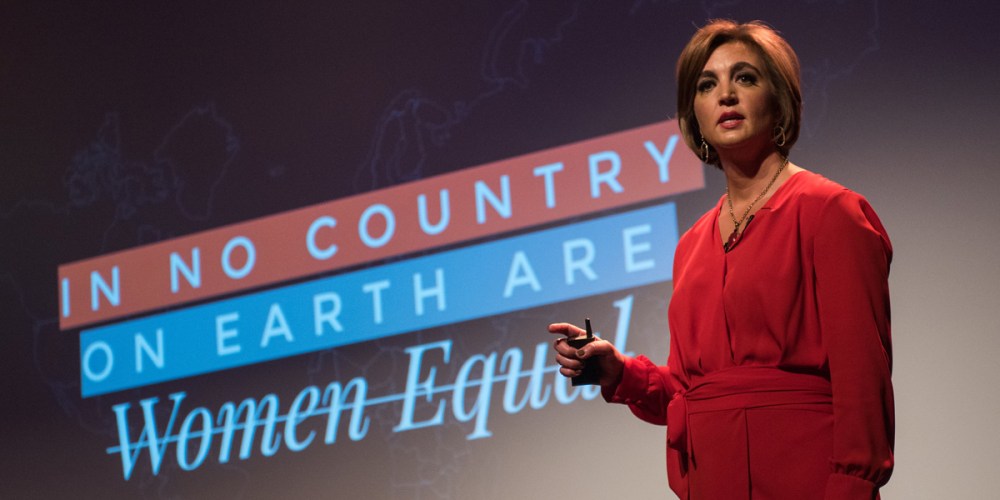
Know Your Value recently spoke to gender economist and CEO of Pipeline Equity Katica Roy to dive into the data to understand the specific steps elected officials should take to ease the economic blow of COVID-19.
Know Your Value: You‘re a gender economist. What are you thinking about right now that most people aren’t?
Katica Roy: For years, I have spent my time looking at the economy through the lens of gender. In the U.S. alone, closing the gender equity gap would expand our GDP by $2 trillion. From my viewpoint, gender equity is not only a social issue, it’s also a massive economic opportunity. A key to unlocking that $2 trillion potential largely rests in the hands of our elected officials.
Public policy today is mostly gender-ignorant, meaning it doesn’t apply the gender lens to determine how said policies impact men and women differently. Gender-ignorant policies inadvertently leave out 51 percent of our population (women) and as a result, constrict the economy. From Social Security to student loans, women have been experiencing the externalities of gender-ignorant policies for decades now. The coronavirus pandemic has only exacerbated them.
Instead of ignoring gender, elected officials should practice gender mainstreaming when crafting policies to ensure that all members of society benefit equitably from them.
RELATED: Suze Orman: 3 smart money moves to make during this uncertain time
Know Your Value: How bleak is the current economic situation and what does it mean for women?
Katica Roy: The week ending on March 7, the Department of Labor registered 211,000 new unemployment claims. Seven days later, the number of new claims had soared to 281,000—a weekly increase of 33 percent. Analysts predict the following week will bring the number of new unemployment claims to more than 2 million, a spike of over 600 percent. If that prediction holds, roughly four million Americans will be out of work. In other words, the number of unemployed Americans would double in just one week.
By March 14, 18 percent U.S. households had already reported layoffs or reduced work hours. For households making less than $50,000 annually, a full 25 percent had faced job losses or reduced hours. Since women are more likely than men to be lower-income and part-time workers, the brunt of these cuts fell on female shoulders. (More than 60 percent of minimum-wage and lower-wage workers are female.)
In Denver, where I live, 81.1 percent of restaurants have laid off their employees. In a blink of an eye, 5,000 restaurant workers in my city suddenly don’t have jobs, and officials expect that number to rise in the weeks ahead. Now, more broadly speaking, women represent 51 percent of all restaurant workers, in Colorado, 45.2 percent of households with children depend on breadwinner moms for their financial security. Nationally, 71 percent of households with children rely on women’s income for their economic well-being.
As a gender economist, I’m concerned for these female-headed households. Because moms, in aggregate, earn 69 for every dollar dads earn, the wage gap puts them at an even greater disadvantage when financial crises hit. It’s part of the reason why children living with solo moms are five times more likely to be poor than children living with solo dads.
Know Your Value: What’s being done to stabilize the economy?
RELATED: 7 personal finance concerns in these uncertain times — and a plan of action for each
Katica Roy: A great deal. Most recently, on March 18, Congress passed a second round of economic stimulus that seeks to soften the economic shock of the pandemic. It includes provisions for paid sick leave, healthcare, unemployment, and food assistance. The Department of Education also announced a 60-day suspension on student loan payments. This forbearance especially helps women because they hold 67 percent of the nation’s $1.5 trillion student loan debt—despite representing 57 percent of all bachelor’s degree holders and higher.
Know Your Value: Are these actions enough?
Katica Roy: They are better than nothing, but we have to do more. There are reports saying the U.S. economy could shrink by 24 percent next quarter, which translates to about $5 trillion annually.”
To put that into perspective, the worst quarter of the Great Recession (fourth quarter of 2008) saw the economy shrink by 8.4 percent, and remember how that felt?
RELATED: 5 things every woman needs to know about coronavirus
Let’s take a step back and look at what drives our economy. It’s made up of four components: personal consumption, business investment, government spending, and net exports. Personal consumption, i.e. consumer spending, represents 70 percent of our economy. In 2019, consumer spending amounted to $14.84 trillion; 7.5 percent of that spending was solely for recreation and restaurants—the types of businesses that are now laying off workers in mass.
Since consumer spending represents such a large share of our economy, we can be certain that the pace of virus-induced job cuts—which skew female—will severely hinder our nation’s economic health. Even for those whose jobs won’t be directly affected by COVID-19, what does it say for consumer confidence when two million people lose their jobs in one week? Or when Wall Street’s “Fear Index” peaks at an all-time high?
When one person spends money, another person makes money. This simple relationship lies at the heart of our capitalist society. But it takes two to tango. As consumers curb their spending, so too will corporations. Soon thereafter, our economic engine could come to a screeching halt.
What we need now is comprehensive fiscal stimulus. Americans need money in their wallets to keep consumer spending strong.
RELATED: Gender economist Katica Roy: Want to be a CEO? Don’t let this No. 1 factor hold you back Know Your Value: What specific recommendations would you provide to elected officials to ensure they bake gender equity into forthcoming stimulus packages and financial policies? Katica Roy: Elected officials should apply the gender lens to all fiscal stimulus going forward and recognize that men and women need different tools to weather the storm. To win back consumer spending specifically, policymakers need solutions to keep women’s wallets full. Due to the gender pay gap, women already had less money coming into their wallets before the coronavirus crisis even began. As job layoffs continue, women’s economic power will continue to deteriorate. Here are some suggestions that would help sustain consumer spending from women and from men: 1. Table all tax payments for 2020 for taxpayers who owe less than $1 million. 2. Reduce mortgage interest rates, expedite refinancing, and stay all evictions. Among single-family homes, 2.3 percent are in delinquency. Taking action now can prevent that number from rising, particularly for the 30 percent of solo mothers living in poverty. At the height of the Great Recession, mortgage delinquency reached 11.54 percent. RELATED: 5 ways to curb coronavirus-related stress and anxiety 3. Table or forgive all student loan payments for at least one year. Remember, women hold 67 percent of all student loan debt, and tabling payment would add $393 into American wallets each month. 4. Get money in the pockets of Americans who don’t have it. Offer income- and family-based payments, or universal basic income (UBI). Instead of giving a $1,000 lump of cash to Americans who met a certain economic threshold, policy makers should factor household income and family structure into UBI allowances. Doing so would ensure the 70 percent of our nation’s poor who are women and children receive equitable assistance. 5. Expand paid sick leave and paid caregiver leave to all workers. The bill Congress passed on March 18 applies only to government and private businesses with fewer than 500 employees, thereby excluding nearly 40 percent of the U.S. labor force. Extending paid leave benefits would come at a welcome relief to caregivers who, more often than not, are women. In fact, women spend 241 minutes performing unpaid labor (caregiving, cooking, and cleaning) every day. Men spend 145 minutes per day. RELATED: Mika’s message to parents of teens during the coronavirus outbreak 6. Provide free skills training to fill job shortages and retrain workers for the digital economy. Use partnerships between community colleges and corporations to fund skills-based degree programs designed on an apprenticeship model. The company pays for the tuition (and receives tax credit for doing so) while paying a stipend to students. Students would move from lower-productivity jobs to higher-productivity jobs with a focus on skills for the Fourth Industrial Revolution. I urge all elected officials not to forget that in a few months, Americans will be casting their ballots. Those in the halls of power, and those wishing to join their ranks, would be wise to remember that women are 53 percent of our nation’s electorate and have increased their participation at the polls by 12 points since 2014. women also vote in higher numbers than men (they’ve done so since 1964). As Abigail Adams famously wrote in 1776, “I desire you would remember the ladies…” Gender mainstreaming—it matters. Katica Roy is a gender economist and the CEO and founder of Denver-based Pipeline, an award-winning SaaS company that leverages artificial intelligence to identify and drive economic gains through gender equity. Pipeline launched the first gender equity app on Salesforce’s AppExchange. The Pipeline platform was named one of TIME Magazine’s Best Inventions of 2019 and Fast Company’s 2020 World’s Most Innovative Companies.
Know Your Value staff Recommended


