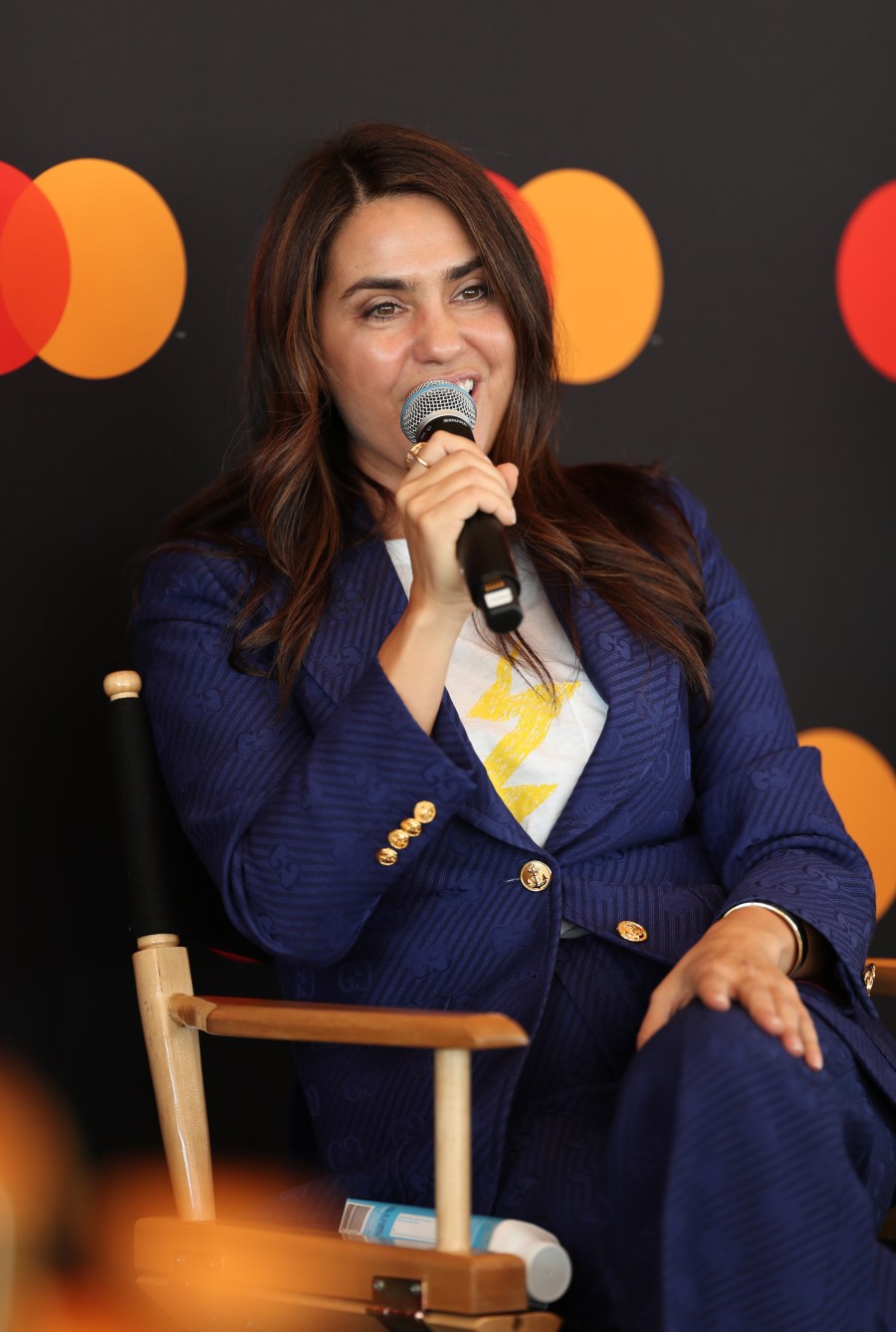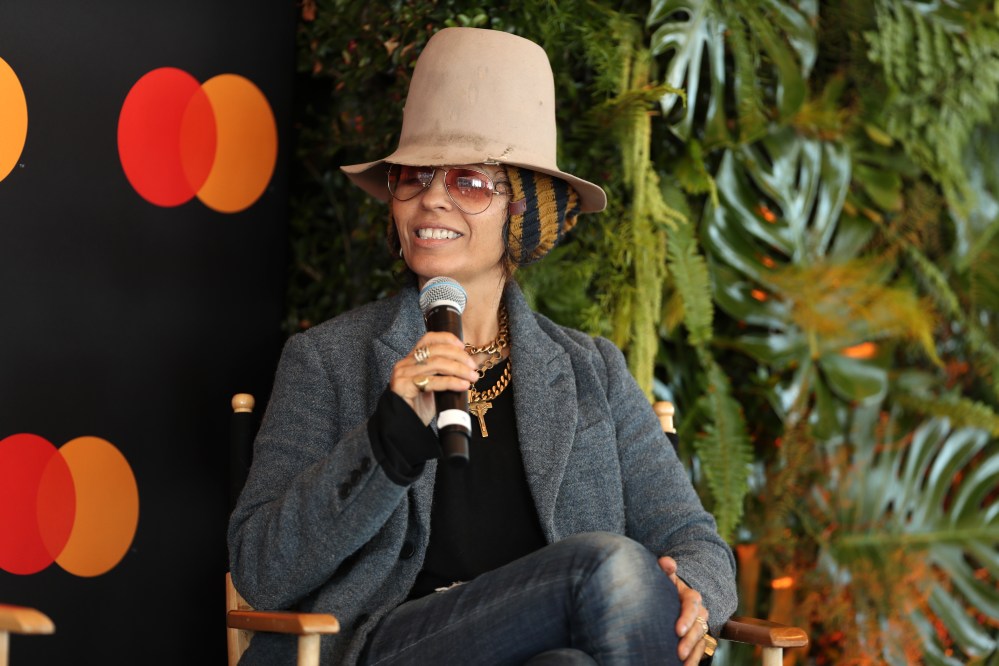
Linda Perry had never been in a recording studio before, but that didn’t stop her from taking matters into her own hands when she didn’t like the way a producer changed her song.
“I couldn’t stand it,” the Grammy Award-winning singer, songwriter and producer said. It was 1992, and Perry and her band, 4 Non Blondes, were recording their debut album, “Bigger, Better, Faster, More!” She knew the song “What’s Up?” was going to be a single, but she wasn’t satisfied with the final version or the producer’s tweaks.
“It didn’t feel like me,” she said. “It didn’t sound like the song I wrote. It had a solo in it, he asked me to change lyrics, there was a marching drum in it.” Perry, armed with one reel of tape, went back to the recording studio, and working with the house engineer started “dialing up sounds and getting guitar tones. The band literally has no idea how I’m doing it, but I’m doing it.” This new version of “What’s Up?” was quickly mastered and added to the album, and “that is the song that sold over eight, nine million records,” Perry said.
Perry shared this story during the “Mastercard Presents: Designing a Better Music Industry for Women” event Thursday in Los Angeles. While the track was a hit and Perry was happy with its sound, she was ultimately denied production credit by the label. “They said, ‘Can’t you just be happy you’re part of the band and you saved the song?’” Perry recounted. “Mind you, they were happy with the other version, and thought I was being a crazy singer. That’s what I heard from them — ‘Can’t you just be a singer? Why do you have to be so involved?’”
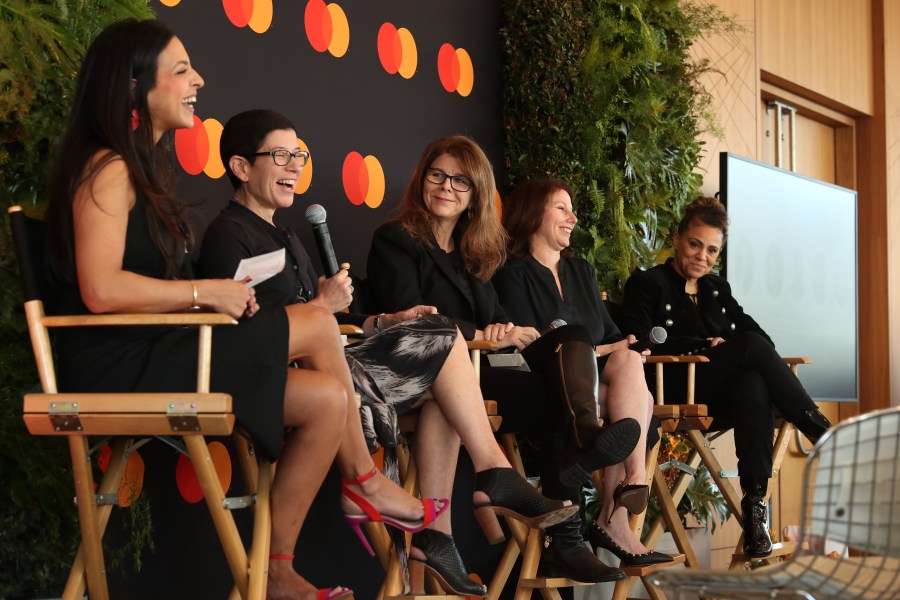
This kind of pushback is still happening to women in the music industry, which is why Perry and other female artists, songwriters and producers are becoming more vocal about changing the way the industry operates. For example, Alicia Keys recently launched a nonprofit, She is the Music, which aims to get more women involved in all facets of the music industry.
“Collective action only happens when people link arms and say, ‘We’re each going to do something at the same time,’” Dr. Stacy Smith, founder of the University of Southern California’s Annenberg Inclusion Initiative, said at the event.
“We all do better when we surround ourselves with diversity of thought,” added Cheryl Guerin, Mastercard’s executive vice president of North America marketing and communications.
Smith’s team just released its new 2020 survey, which looks at how many women are involved in the creation of hit songs, and the numbers are dismal. “Eleven men over the last eight years in 800 songs are responsible for 23 percent of the lyrics in music,” Smith said. “Eleven predominantly white men are controlling cultural beliefs, attitudes, and perception. That should be terrifying.”
Out of 800 songs, women represent less than a third of all performers, and only 12.5 percent were written by women. Across 500 songs, just 2.6 percent of producers were women, and in the last 15 years, only one woman has been nominated for the Producer of the Year Grammy: Perry. The overall ratio of men to women producers in 2019 was 37 to 1, an improvement over 2018, when that number was 47 to 1.
“There is unconscious bias, but most of these practices are very conscious,” Smith said. She praised Selena Gomez for “having the courage” to “hire a woman on every single song” that appears on her new album “Rare.” “They’re out there,” Smith said. “They’re talented, but blocked by the status quo.”
Gabrielle Armand, vice president of marketing at Jazz at Lincoln Center, shared one way that her company is becoming more inclusive. The 15-member Jazz at Lincoln Center Orchestra for years had been an all-male group. This wasn’t deliberate, she said, but “no one was forcing the issue.”
When one member left the orchestra, it was time for “the issue to get forced,” she said. “We now have a woman on our bandstand in the front row, sitting in the saxophone chair. We have set up a blind audition process, which is a huge step forward that protects everyone. That’s bigger than just women; that gives opportunity across the board to the disabled, to women, to men, to all kinds of people.” Educating the public is one way to enact change. Last year, Emily Lazar became the first woman to win the Grammy for best engineered album (non-classical) for Beck’s “Colors.”Lazar, founder of The Lodge, is also a songwriter and performer, and in the early 1990s became frustrated when she wanted her music to sound one way, but couldn’t get the engineer on the same page. “I became addicted to figuring out how to get these sounds that were in my head onto the tape,” she said. She felt like there was “missing dialogue” between her and the male engineers, and “I needed to control my own destiny a little bit.” At the time, “women were scarce, even more so than now. It was a very arid landscape. … I learned everything I could so no one could knock me off my block. There was a real tendency for people to challenge anybody who was in the status quo of what was going on.” Lazar said when her friends learned she was the first woman to win in her Grammy category, they were shocked. “I tried to make it clear that there are women out there doing amazing things in STEM fields and music,” she said. “I feel like if you can see her, you can be her. That example for me was really important, so we could educate the general public on what is going on.” As a producer, Perry does her best to instill confidence in musicians, allowing them to feel empowered. Perry has worked with Gwen Stefani, Christina Aguilera, and Pink, and told NBC News’ Know Your Value that her “number one job is to make the artist feel safe.” She is ready for the music industry’s key players to stop speculating about why women are underrepresented and start doing something about it. “We need more facts,” she said. “You don’t know why the toaster is broken until you open it up and start diving in. That’s what’s happening now.”
Catherine Garcia Recommended