








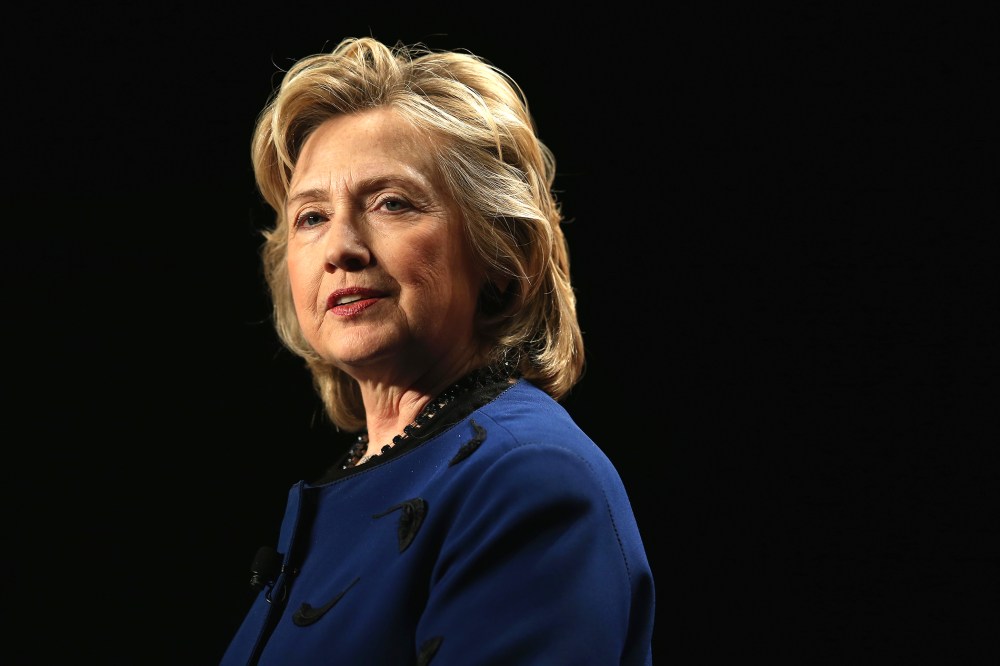
Eight years ago, on Jan. 20, 2007, then-Sen. Hillary Clinton made it official: She was in the race for the presidency, and she was in to “to win,” she said in a video on her website, seated on a floral couch in her living room. History had other plans, and Clinton’s campaign collapsed under the weight of infighting and misguided strategy as Barack Obama seemingly came out of nowhere to rob her of the Democratic nomination.
Now, with Democrats putting all their political eggs in Clinton’s basket to save the party in 2016, they are anxiously waiting to see if the former secretary of state has learned from her mistakes of 2008, should she decide to run again.
RELATED: Is this Hillary Clinton’s economic agenda?
Promising new leadership, a new message and new strategy, Clinton allies say the former secretary of state is under no illusion about what went wrong in 2008 and is eager to learn from her mistakes — but some wonder if she’s too busy fighting the last battle to win the next one.
The loss was devastating for Clinton, as she wrote in her 2014 memoir, “Hard Choices,” and it took her time to understand what went went wrong. “I really didn’t have a good strategy for my campaign,” she told ABC News last year. “I didn’t plan it the right way … I let people down.”
Since then, the former secretary of state has been preoccupied with not repeating the mistakes. “If she runs, of course this time will be different,” said Clinton spokesperson Nick Merrill. “As she decides, she’s casting a wide net and wants to hear from a variety of people on a range of specific topics, from policy ideas to what a successful campaign would look like.”
“I think it will be profoundly different,” said Democratic strategist Bob Shrum. “She will offer a sense of vision about the future,” and not be a candidate “of restoration,” he said.
The addition of new blood into the Clinton high command represents the most dramatic shift apparent so far. Gone from the very top ranks of the prospective campaign are long-time Clinton loyalists, with baggage and institutional knowledge, and in are new faces to Clinton’s world, many from Obama’s. If you can’t beat them hire them, the thinking goes.
To replace Mark Penn, who advised Clinton to downplay her potentially historic role as a woman in the top echelon of politics and project an aura of inevitability, Clinton hired former Obama pollster Joel Benenson as her chief strategist. Jim Margolis, Obama’s ad maker, is expected to be Clinton’s media consultant, replacing the team that made the couch announcement video. Meanwhile, Clinton’s pollsters and field directors are also likely to be Obama alums, as are top officials at the main big-money super PAC supporting her bid.
“She’s certainly bringing in a broader perspective and new talent, and I think that’s a good sign,” said Stephanie Cutter, a Democratic strategist who sat out the 2008 Democratic primary before signing on with Obama for the general election.
RELATED: Look who’s talking: 2016 heats up
Allies say Clinton has proven she can run a good campaign — it just came too late. In the waning days of 2008, after it was clear the nomination was slipping away, Clinton became warm with voters and an underdog populist on the stump, while shaking up her team at headquarters.
Former top Obama strategist David Axelrod has said Clinton was a bad candidate in 2007, but a good one in 2008 after she lost the Iowa caucuses in early January. “Once she wasn’t the frontrunner anymore, once she was fighting for her place, she threw all the caution away and I think she started relating to voters in a much more visceral way that reflected who she really is,” Axelrod said recently while waiting for a potential Clinton arrive at an event he was hosting in Chicago. “If I had any advice for her, it would be: Be that person.”
It’s still too early to know whether she will be that person, and an upheaval is always one campaign shakeup away. Plus, the vast majority of the campaign’s team remains to be seen.
To clamp down on in-fighting, which plagued the 2008 campaign, Clinton is expected to enlist John Podesta, a former White House chief of staff under President Bill Clinton who imposed order during the particularly difficult times of the Monica Lewinsky scandal.
The typically low-key Podesta is famous for having an alter ego, or “evil twin” named Skippy whose acerbic tongue makes sure things stay on track and people behave. When he took over as chief of staff in November of 1998 he joked he told reporters that he values his staff, in addition to talent and experience, is people who can “work together as a team. The President deserves that; the country deserves that; and so does the White House staff.” Clinton and her team were blindsided by the success of Obama in 2008, but they’re keeping closer watch on potential threats from the left this time around. Her staff and outside allies follow Massachusetts Sen. Elizabeth Warren closely, keeping an eye on her speeches and public appearances. In Iowa, where Clinton campaigned for Senate candidate Bruce Braley and other Democrats last year, her team inquired how Warren’s appearances in the state been attended and what the enthusiasm level was like. “I think that she’s very sensitive to this Elizabeth Warren trying to paint her as being identified with Wall Street,” longtime Clinton friend and donor Alan Patricof recently said on Bloomberg TV. “And I don’t think it’s true, frankly, because it’s just part of her base, and I think she can willingly sacrifice some of that base to bring herself to a position where she’s not identified with it.” RELATED: Hillary Clinton most admired woman of 2014 Clinton herself has made entries to the restive liberal base, meeting with progressive activists sometimes critical of her style of politics and embracing Warren’s rhetoric where she can. The former presidential candidate also struggled in her relations with the media, with a hostile style that bred resentment and distrust. While nothing is official, operatives rumored to be in the running for top jobs in a Clinton communication shop say they hope for a different approach and fresh start with the press. Her old top press handlers, including Phil Singer and Howard Wolfson, are not expected to reenlist. “It has to be different this time around. It’s not an option. And it will,” said one Democratic communications operative who hopes to be involved in the campaign. But with an announcement still likely months away, some allies wonder if Clinton is to preoccupied with fighting her last battle. “There’s a lot of people that are taking a look at this and saying, we agree this needs to be a different campaign from 2008, but just doing what someone else did in 2012 doesn’t fundamentally fix what went wrong,” said one Clinton ally. In speeches since stepping down as secretary of state, Clinton has mostly avoided taking on the painful primary loss directly. It’s “a little bit ancient history,” she joked during a speech at UCLA last year. Now she’s hoping history does not repeat itself.
Alex Seitz-Wald Recommended


