Readers had a lot to say recently, when I argued that everyone’s insurance — even men’s — should cover maternity care. Americans may never agree on whether essential health services are a community responsibility, but we’ll have a richer conversation if we can all get clear on how the Affordable Care Act works. To further that goal, I’d like to challenge some of the assertions that critics often make while attacking it. Here are three posts from our comments section, and some facts to help put them in context.
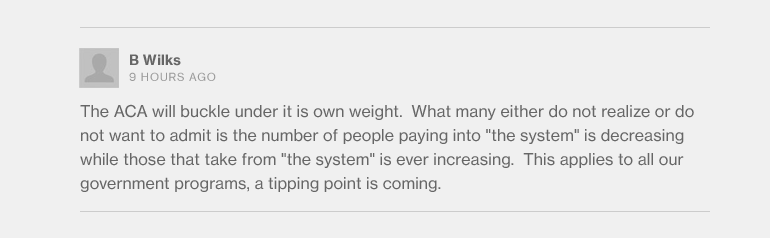
Actuaries call it a “death spiral” when an insurance system stops taking in the resources needed to cover its obligations. No one wants to go down that drain, and the Affordable Care Act includes powerful provisions to keep us out of it.
The number of people paying into the system is not “decreasing” under Obamacare. If anything, that number will explode next year, as millions of currently uninsured people face a new mandate—and a new opportunity—to buy health coverage.
The health care law requires anyone who can afford insurance to buy it. That’s not a popular provision, but the logic is inescapable: when only sick people buy health insurance, it becomes prohibitively expensive. When we all buy health insurance, it covers the same costs without bankrupting anyone. By buying in when we’re young and healthy, we invest in the care we’ll need when we’re older and sicker.
The individual mandate also ensures that people don’t forego affordable insurance while they’re healthy, and then “take from the system” when they’re sick. That’s why the conservative Heritage Foundation used to advocate an individual mandate.
While taking steps to discourage free riders, Obamacare also sets money aside to make sure insurance systems don’t collapse when they run short of healthy members. If a company insuring people through one of the state marketplaces starts paying out more than it takes in, the government covers a percentage of the excess so that the insurer doesn’t collapse before adjusting its rates. If you’re curious about the details of these so-called risk corridors, check out this issue brief from the Robert Wood Johnson Foundation.
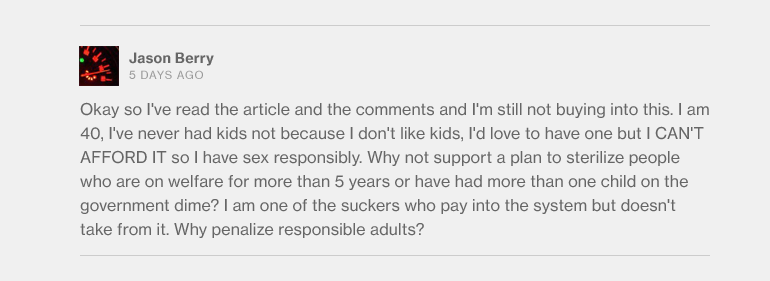
I share your concern about the public cost of obstetric care; Medicaid pays for nearly half of U.S. births, and the percentage has been rising. But surely there are better ways to reduce the need for these services. Rather than forcibly sterilize people for what you deem irresponsible sex, the nation should empower low-income women to prevent unintended pregnancies.
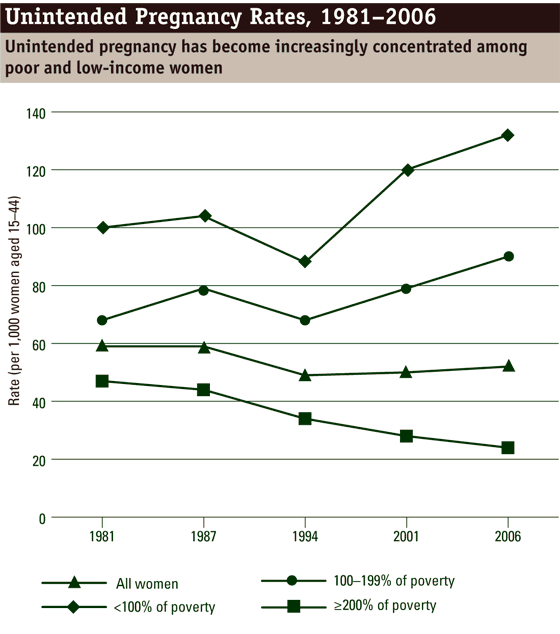
Roughly half of all U.S. pregnancies are unplanned—an astronomical figure by global standards. The rate has declined among higher-income women over the past three decades (see chart), but it has risen among the poor, as health care and birth control have become less affordable. By 2006, the unintended-pregnancy rate was five times higher among poor women than among those earning at least twice the federal poverty wage.
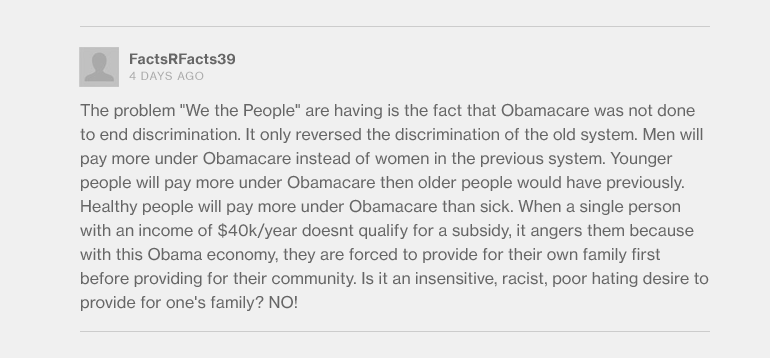
What explains this stark disparity? Until now, most states have denied Medicaid coverage to low-income adults until they’re disabled or pregnant. Without health insurance, millions of women have lacked affordable birth control. Many have gotten pregnant as a result—and Medicaid has then covered their maternity care. Obamacare could change this dynamic. Under the health care law, states can expand Medicaid to cover all impoverished adults, even before they’re pregnant or disabled. Twenty-four states have yet to seize that opportunity, but millions of poor women will gain access to birth control in the 26 states that are expanding their Medicaid programs next year. The Affordable Care Act also ensures that women with private health insurance don’t get priced out of birth control through deductibles and copays. At the urging of the nonpartisan Institute of Medicine, the Obama administration has included birth control among the preventive services that insurers must now cover in full. Together, these provisions could spare millions of women from pregnancies they don’t expect and can’t afford. I’ve double-checked FactsRFacts’ assertions, and not one of them withstands scrutiny. Until now, insurers have used age, sex and health status to reject individual applicants or price them out of coverage. Under the Affordable Care Act, women will pay exactly the same insurance rates as men—no more, no less. Pre-existing medical conditions won’t affect people’s rates one way or the other. And though older adults will still pay more than young adults (not less, as the commenter claims), they’ll pay three times more instead of five times more. Aside from age, the only factors that will affect insurance rates are location, family size, and smoking. As for that single person with an annual income of $40,000: he or she will definitely qualify for help. The law extends subsidies to people making less than four times the federal poverty wage. That’s $45,960 for an individual, or $94,200 for a family of four. For details on how the subsidies work, see the Kaiser Family Foundation’s subsidy calculator.
Geoffrey Cowley Recommended