








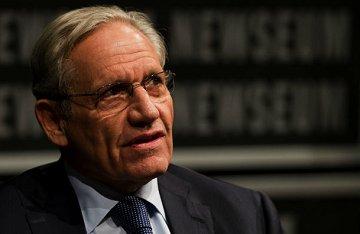
Even legends go through slumps. An iconic movie star might make a couple of box-office duds; star athletes may struggle for a while; pop stars might release some uninspired albums; and in Bob Woodward’s case, a celebrated journalist might fall in a metaphorical ditch and inexplicably keep digging.
The heralded Washington Post reporter first ran into trouble with an op-ed on the sequester, which included a series of factually-inaccurate claims. Instead of running a correction, Woodward doubled down on his mistakes. As criticism mounted, Woodward appeared on msnbc yesterday to criticize President Obama, complaining that it’s “madness” for the White House to follow federal laws written on a “piece of paper,” giving the impression that he thinks it’s inexcusable for the president to honor laws duly passed by Congress.
With many wondering aloud what’s wrong with Woodward, the reporter, apparently eager to make himself the center of a larger story about himself, turned to Politico’s Mike Allen and Jim VandeHei to up the ante.
Bob Woodward called a senior White House official last week to tell him that in a piece in that weekend’s Washington Post, he was going to question President Barack Obama’s account of how sequestration came about — and got a major-league brushback. The Obama aide “yelled at me for about a half hour,” Woodward told us in an hour-long interview yesterday around the Georgetown dining room table where so many generations of Washington’s powerful have spilled their secrets.
According to Woodward, when he prepared to publish his now-debunked op-ed, he received an angry call from Gene Sperling, a top economic aide to President Obama, who grew frustrated with Woodward’s dubious claims. The reporter told Politico that Sperling made a veiled threat, telling Woodward he’ll “regret” publishing the piece. He repeated the claim on CNN, insisting, “It was said very clearly, you will ‘regret’ doing this.”
And at it was this very moment when Bob Woodward put his credibility as a journalist on the line — and lost.
Last week, after their phone conversation got a little heated, Sperling emailed Woodward directly and said, “I apologize for raising my voice in our conversation today…. But I do truly believe you should rethink your comment about saying that Potus asking for revenues is moving the goal post. I know you may not believe this, but as a friend, I think you will regret staking out that claim.”
Sperling added in his email, “I agree there are more than one side to our first disagreement, but again think this latter issue is diffferent. Not out to argue and argue on this latter point. Just my sincere advice. Your call obviously. My apologies again for raising my voice on the call with you. Feel bad about that and truly apologize.”
Woodward told the world yesterday that this was the threatening email he received. He took a few words out of context in order to look like a victim of heavy-handed White House pressure, but now that the email itself is available, it’s clear there was nothing threatening about Sperling’s message and Woodward’s efforts to suggest otherwise were deliberately deceptive. Indeed, in case facts still matter, what Sperling argued happened to be true — Woodward had several key facts wrong. It’s no doubt why Sperling wrote, “I know you may not believe this, but as a friend, I think you will regret staking out that claim.”
That’s not a threat. That’s a White House professional gently trying to encourage a journalist not to publish a mistake.
Indeed, Woodward himself, after receiving the email he now says included the threat, responded to Sperling:
“You do not ever have to apologize to me. You get wound up because you are making your points and you believe them. This is all part of a serious discussion. I for one welcome a little heat; there should more given the importance. I also welcome your personal advice. I am listening. I know you lived all this. My partial advantage is that I talked extensively with all involved. I am traveling and will try to reach you after 3 pm today. Best, Bob” Funny, Woodward didn’t mention any of this when claiming he’d been threatened. This would be an ideal time for Woodward to start walking back some of his increasingly bizarre claims, but instead, he’s agreed to appear on television tonight — with Fox News’ Sean Hannity. No, seriously. When it comes to his chosen profession, Bob Woodward has had the kind of career most media professionals can only dream of. I’m not just talking about Watergate or his Pulitzers; books like The Brethren are just exceptional pieces of work. This is a reporter who’s earned his place in journalistic history. Which is why it saddens me to see him become so reckless for no reason. I just can’t figure out what’s gotten into Woodward, or why he’s acting so erratically. But at this point, it seems Woodward is doing lasting, possibly irreparable harm to his once-sterling reputation, and that is a genuine shame.
The place for in-depth analysis, commentary and informed perspectives. Recommended


