








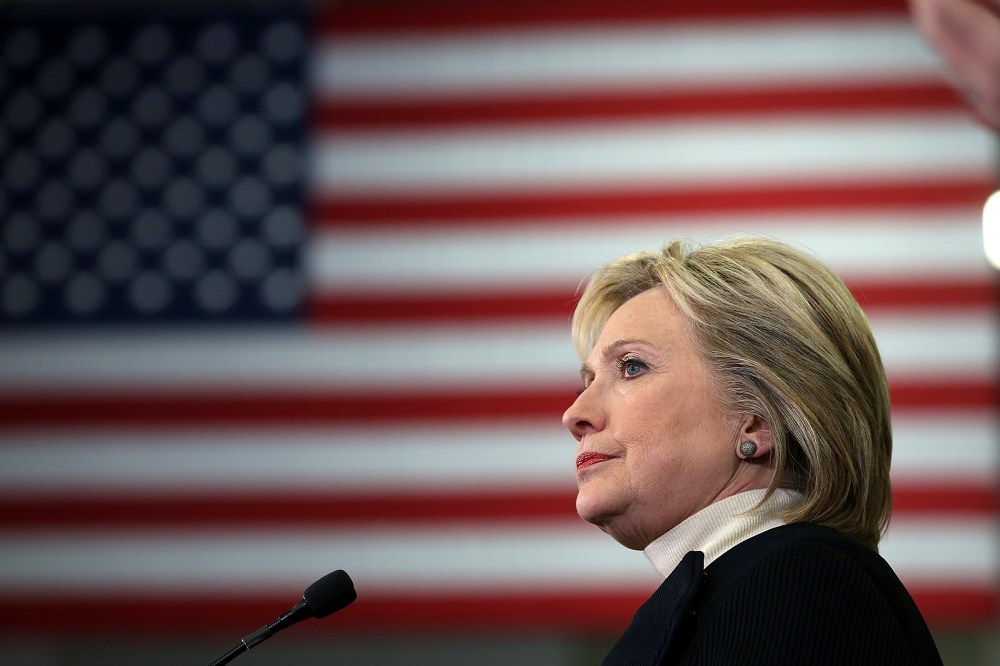
HOOKSET, New Hampshire – A longtime bastion of the Clinton dynasty has fallen, just the latest, most ominous sign of Democratic discontent with Hillary Clinton’s candidacy.
Bernie Sanders soundly defeated the former secretary of state Tuesday in New Hampshire, a state that in the past had salvaged the presidential dreams of both Hillary Clinton in 2008 and Bill Clinton in 1992. But not this time and not even close, as nearly every demographic group soundly rejected Clinton’s candidacy in favor of a 74-year-old socialist barely known to most Americans.
To be sure, the Democratic Party has moved to the left since 2008, when Clinton edged past Barack Obama to claim a win in the Granite State. And the outcome of this race was predicted by both campaigns, since Sanders was boosted by New Hampshire’s proximity to his home state of Vermont.
But physical proximity is only a small part of the story. Sanders’ double-digit victory was an undeniable blowout, and it speaks to the many unresolved, underlying weaknesses of Clinton’s candidacy and her campaign. The flaws were initially revealed by her narrower-than-expected win in Iowa last week and are unlikely to go away even in states with more diversity.
Sanders ran the tables among nearly every subset of the Democratic electorate here, according to NBC News exit polls, even beating Clinton by a handful of points among women. His showing among young voters was even more eye-popping, with fully 75 percent of voters under 45 rejecting Clinton’s candidacy. He also performed strongly among independent voters, who make up about 40 percent of the New Hampshire electorate.
Clinton retains her near-lock on the Democratic nomination, thanks to her prohibitive lead among so-called super delegates and strength in more diverse and delegate-rich states. But Sanders will raise a fortune tonight and use a momentum claim to carry him — his campaign aides insist — all the way to the Democratic National Convention in July. No Democrat has ever won New Hampshire by more than 16 percentage points, a margin set by Michael Dukakis in 1988.
Full coverage of the 2016 race
Clinton advisers moved to spin the results early, sending a memo to reporters moments before the polls closed conceding outcome and looking ahead. Clinton took the stage barely an hour later and wrapped her speech to head home to her home outside New York City.
The campaign only rented the room until 11:30 p.m., according to an aide, knowing it would be early night.
Braced for the defeat, supporters at Clinton’s primary night watch party – which was notably never marketed as “victory” party – were conspicuously boisterous. They started chants long before the candidate took the stage and repeatedly drowned out her remarks as she spoke.
“I also know what it’s like to stumble and all. And so many people across this country know that feeling. And we’ve learned it’s not whether you get knocked down, it’s whether you get back up,” Clinton said, showing no emotion.
“I know I have some work to do, particularly with young people,” Clinton said. “Even if they don’t support me now, I support them.”
The barely concealed subtext of the night from team Clinton was a desire to sweep the night under the rug and move on to upcoming contests in South Carolina and Nevada, where a diverse electorate favors Clinton over Sanders.
The memo from Clinton campaign manager Robby Mook noted that the first four nominating states, despite their outsize attention, represent only 4 percent of the Democratic delegates at stage, while March states are responsible for 56 percent of delegates.
Already staff from both campaigns that were based in Iowa and New Hampshire have been shipped out across the country to the 11 states that vote on March 1 and those whose contests come later in the month. Clinton’s press aide in charge of liaising with minority media outlets, of which there are not many in New Hampshire, passed out paper copies of press releases touting her support in South Carolina and with African Americans. Jennifer Palmieri, the campaign’s communications director, said Clinton was doing well. “She’s in good spirits. She doesn’t like to lose, but she expected it,” Palmieri told reporters. “And like most things in her life, she’s onwards, focused on the next thing.” Clinton and her campaign will spin the defeat as a product of New Hampshire being in the Vermont senator’s backyard. Sanders had been leading in polls since August (minus a brief interruption late last year), and Clinton and her team worked hard to lower expectations before voters were cast. But the Clintons have had an emotional connection to this state, which has long been called “Clinton County.” Hillary Clinton unexpectedly won the state in 2008 as her campaign seemed to be in free-fall. She and her husband have been campaigning here since 1991, the year before his second-place showing the primary made him the “comeback kid” and helped put him on the place to the nomination. As both Clintons have often said, New Hampshire was there for both of them when they needed it most – except for tonight. “I still love New Hampshire,” Clinton said. “Now I’m going to take this campaign to the entire country.”
Alex Seitz-Wald Recommended


