








Besides the food, family, and presents, movies are a fundamental part of how most Americans celebrate the holiday season. Christmas movies have become a staple in many households, with a dozen or so films reaching iconic status, airing year after year with welcome familiarity.
What is often overlooked, however, about our favorite movies of the genre, are the subversive and progressive themes inherent within so many of them.
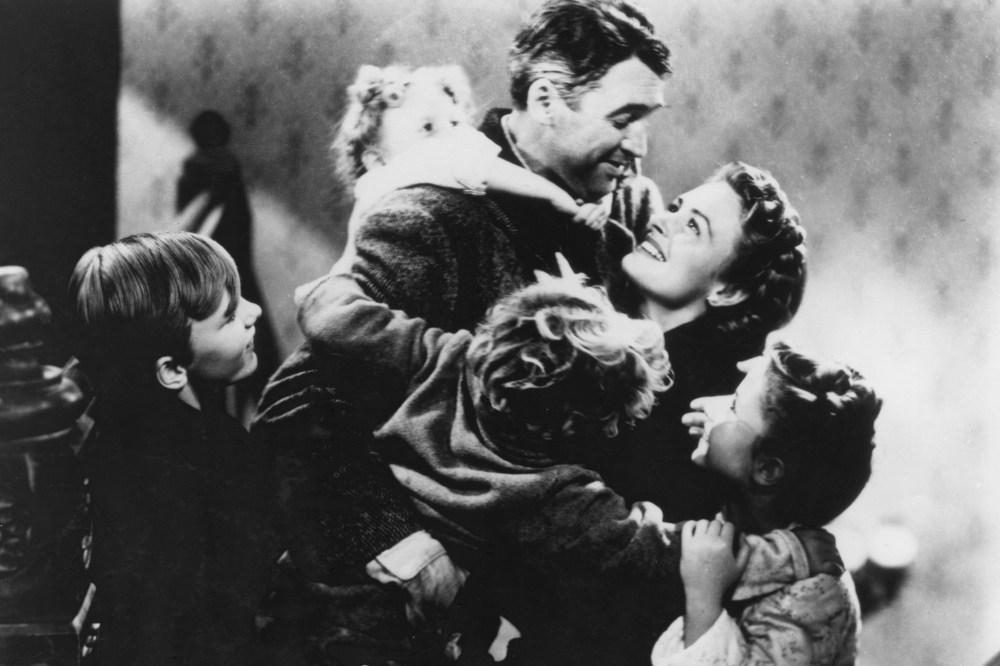
Take the Jimmy Stewart 1946 classic “It’s a Wonderful Life” for instance. Despite the conservative reputation of its star, the sentimental Frank Capra film about a small town man who is reminded of the positive impact he’s had on lives of others by his guardian angel, was labeled as sympathetic to Communism by the FBI. In recently unearthed documents, the agency claimed the film was an “obvious attempt to discredit bankers” by making the villain of the film, Mr. Potter, the richest man in the fictional town of Bedford Falls and the owner of a financial institution. The internal FBI memo called the plot device a “common trick” of Communists.
It was “Atlas Shrugged” author Ayn Rand, an icon in some right wing circles, who flagged the content of the film to the feds. Ironically, Capra was a political conservative, who once claimed that the purpose of “It’s a Wonderful Life” was “to strengthen the individual’s belief in himself” and “to combat a modern trend toward atheism.” Still, FBI analysts felt the movie “deliberately maligned the upper class, attempting to show the people who had money were mean and despicable characters.” Despite their reservations, “It’s a Wonderful Life” received critical acclaim, five Academy Award nominations and is routinely ranked as one of the best American holiday films ever made.
“It’s a Wonderful Life” could also arguably be credited with providing the blueprint for every future holiday film classic. When in the need of villain, more often than not, Christmas-themed movies rely on a one-percenter. In 1989’s “National Lampoon’s Christmas Vacation,” the Griswold family’s dream of getting their own pool (a middle class aspiration if there ever was one) is derailed when patriarch Clark Griswold (Chevy Chase) is denied an anticipated holiday bonus by his heartless, well-to-do corporate overlord:
In “Gremlins” (1984), which is set during the holiday season, before our hero Billy Peltzer (who like “It’s a Wonderful Life” protagonist George Bailey, works at a bank) is terrorized by pint-sized creatures that have run amok, he must contend with Mrs. Deagle, a cruel, moneyed woman who threatens to kill his dog:
In the Nicolas Cage film “The Family Man” (2000) he plays a Wall Street executive (described as “a credit to capitalism”) who learns the redeeming qualities of a more humble lifestyle over the holidays. And in the 2003 film “Elf,” a children’s book publisher played by James Caan ultimately decides to rebuke his boss, who is portrayed as only preoccupied with profits, to spend more time with his sons — one of whom is the the estranged elf of the title, played uproariously by Will Ferrell. But the godfather of all capitalism-critiquing holiday movies may be — “A Christmas Carol” — adapted from the beloved Charles Dickens 1843 novella of the same name. Now, this is a narrative Sen. Bernie Sanders would love. Ebenezer Scrooge, a rich, misanthropic money lender is forced to confront the havoc his greed has wrought over the course of one night, only to emerge as a changed man, committed to the betterment of his family and community. This story has taken on many iterations over the years — including the more modern 1988 Bill Murray comedy “Scrooged,” in which he plays a soulless media mogul who, among other things, realizes the virtue of not selling out for material things: The figure of Scrooge has become so powerful, and so commonly linked to conservatives (Salon’s Joan Walsh once referred to the GOP’s 2014 platform as a the “Scrooge agenda”), that some on the right, like columnist Ann Coulter, have tried to recast the character as a liberal. Still, as is often the case with films, perception is often more persuasive than prose:
Adam Howard Recommended


