








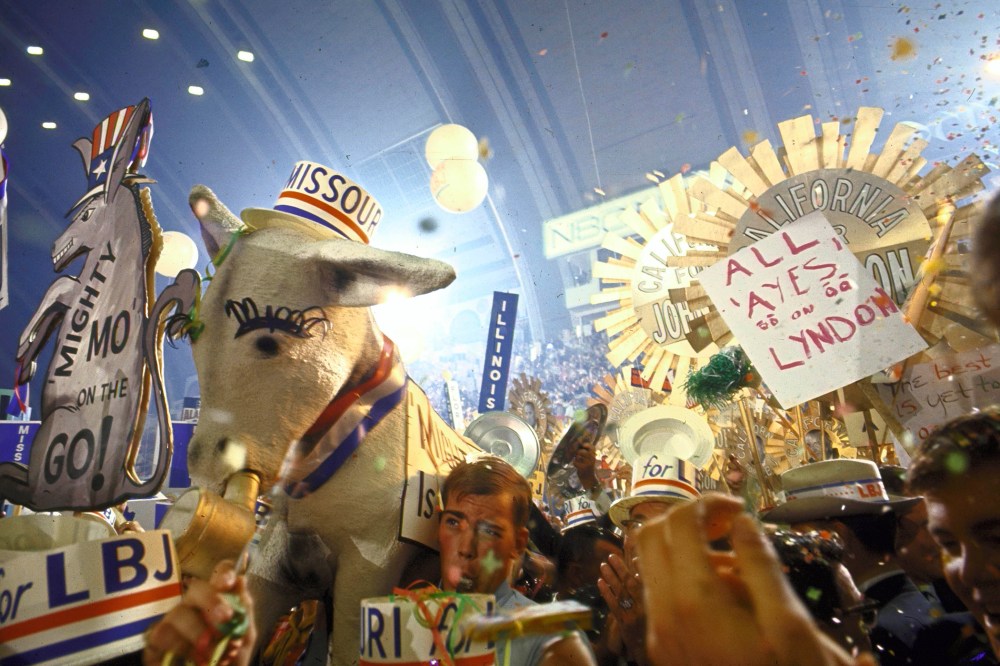
ATLANTIC CITY, N.J. – This city is known for its world-famous casinos, boardwalk and being the long-held home of the Miss America Pageant – not a place one would typically associate with a landmark national political convention.
But back in 1964, Democrats chose the resort city to host their presidential nominating convention, less than a year after President John F. Kennedy’s assassination. President Lyndon Johnson, who had taken office nine months earlier following Kennedy’s death, was expected to easily clinch the nomination. But drama ensued and its outcome will always be an important chapter in America’s civil rights history.
Civil rights activists viewed the August convention as an opportunity to spotlight the exclusion of African-Americans from voting. African-Americans in Mississippi that year had formed their own political party, the Mississippi Freedom Democratic Party (FDP), and its members traveled to Atlantic City to attend the convention and rail against the seating of Mississippi’s all white, Democratic delegation. At the heart of their argument was that the state’s party prohibited African-Americans from helping select convention delegates and that the makeup of the Mississippi delegation did not truly represent those living in the state.
At the convention, civil rights leader and vice-chair of the FDP, Fannie Lou Hamer, drew national attention to the issue, famously declaring in the main auditorium, “I question America. Is this America, the land of the free and the home of the brave where we have to sleep with our telephones off of the hooks because our lives be threatened daily because we want to live as decent human beings in America?”
Liberal delegations rallied around the FDP, posing a big problem for Johnson, who was worried about losing southern white votes. At the request of Johnson, Sen. Hubert Humphrey—who would go on to become the party’s candidate for vice president – tried to hammer out a negotiation with the FDP. A potential deal involved giving the FDP two seats and a promise for change in the 1968 convention. In the end, the FDP delegates rejected the compromise.
“If we got two votes at large, we didn’t have nothing,” Hamer had said at the time. Still, the challenge at the convention helped bring about support for the 1965 Voting Rights Act, which barred discriminatory voting practices that had been used to deny people, particularly African-Americans, their constitutional right to vote. Hamer’s testimony also played a factor in the Democratic National Committee changing the rules in 1968 to require equal representation of state delegations at the party’s conventions. Convention Hall, where the political event took place in Atlantic City, has since been renamed as Boardwalk Hall and was declared a U.S. National Historic Landmark in 1987. Other than being home to the Democratic National Convention in 1964, the building, which sits on the water, has also served as a sporting venue and stage to The Beatles, The Rolling Stones, Madonna and others. This is part of msnbc.com’s “Road Trip ” series, which has msnbc.com reporters traveling across the country to profile movements that sparked change in America. For more, click here.Recommended


