









When three Virginia police officers put Linwood Lambert in a squad car around 5 a.m. on May 4, 2013, they said they were taking him to the ER for medical attention because he was speaking delusionally. Just over an hour later, Lambert died in police custody.
He was never given medical care, though the officers of South Boston, Va. did drive him to the hospital. He was not initially put under arrest, though the officers ultimately arrested him, shackled his hands and legs, and tased him repeatedly. While in custody he was agitated and ran from the officers. Ambulance workers say police later claimed he fought them at a time when videos show he was actually unconscious. Police dispute that account and deny allegations of excessive force.
Over two years later, there have been no charges and no full public accounting of what happened. But a new investigation, including police videos obtained exclusively by MSNBC, shows the deadly trip for the first time.
A RIDE TO THE HOSPITAL
Linwood “Ray” Lambert, a 46-year-old man who worked in construction, was staying at a Super 8 motel in South Boston, a town of about 8,000 people in Southern Virginia. In the middle of the night of May 4, 2013, police received calls about noise complaints at the hotel. When three officers came to Lambert’s door just before 5 a.m., they say he was acting paranoid, hallucinating and telling them there were bodies buried in the ceiling.
Since Lambert was unarmed and not suspected of any crime, the officers did not arrest him. They thought he needed medical care, so they told him to come on the short trip to Sentara Halifax Regional Hospital.
%22Why%20are%20you%20trying%20to%20kill%20me%2C%20man%3F%20Don%E2%80%99t%20do%20it%2C%20please%20don%E2%80%99t%20do%20it%2C%20please%20officers.%22′
The officers cuffed Lambert’s hands for the ride, but assured him, “we’re not locking you up, we’re going to the ER”
The three officers, Cpl. Tiffany Bratton, Officer Clifton Mann and Officer Travis Clay, departed the hotel in three police cars. Video from one shows an officer calling the hospital, asking for the mental health care worker on duty.
On the ride, Lambert looks increasingly agitated. The video shows him asking about a light in the backseat, and then about a squad car trailing them. An officer tells him, “you good, trust me.”
A few minutes later, though, everything changed.
“BLEEDING LIKE A HOG”
As the officers pulled up to the hospital, Lambert kicked out the squad car window.
Video from inside the car shows officers yelling at him to stop. When they cracked the passenger door, Lambert jumped out, sprinting roughly 20 feet towards the ER entrance and crashing into the building’s glass doors.
The officers ran after him and began tasing him. In response, Lambert’s body goes stiff and, with his hands cuffed, his arms could not break the fall when he hit the cement. The three officers surrounded him on the ground.
One ordered him to “stay down;” another, Officer Bratton, told him, “Every time you get up, I’m going to pop you.”
Lambert told them, “I didn’t do nothing,” and can be heard moaning in the recording. The officers tell Lambert to lie down, stay down, get on his belly, and roll over — while warning they will taser him again.
“I’m going to light you up again – roll over, roll over, turn over!” Bratton says.
Lambert remained on the ground, saying OK, but the officers tased him again. They restrained his legs with shackles.
Then, as Lambert appears subdued on the video, the officers warned Lambert they would taser him again. “I’m going to hit you again,” Bratton tells him.
Then Lambert says, “I just did cocaine.”
For the first time that night, officers tell Lambert he is under arrest, calling it in for disorderly conduct and destruction of property.
Lambert pleads to the officers, “Why are you trying to kill me, man?,” and asks them to stop the tasing, saying, “don’t do it, please don’t do it, please officers.”

As videos from the hospital and police cars show, the entire scene plays out right in the doorway to the ER, with nurses and hospital staff watching. But then the officers make a fateful decision – to take Lambert away without getting him medical care, the original reason they took him into custody.
Instead, they hauled him back into the squad car and began a new round of tasing.
Police video shows Lambert shackled and subdued in the car, apparently restrained, as officers warn him again and tell him to sit up.
“Act like you got some sense,” says one officer. Another warns, “sit up or I’m going to tase you again.” Reaching into the car with two Tasers, the officers tase Lambert as he slumps down in the seat.
At one point, Officer Clay made contact with Lambert’s neck inside the car, and the officers discuss whether Lambert was trying to bite him. The video does not appear to show a direct bite occurring. Clay went to the ER later that morning, at 7:35 a.m., to get treatment “for a possible bite,” according to police records. In his incident report, he writes that Lambert “was biting at me.”
In addition to the video, nurses on the scene say they saw “three officers” tasing Lambert “at one time,” according to hospital records obtained by MSNBC.
A single, 5-second Taser discharge carries 50,000 volts and generally incapacitates a person, because it temporarily turns the human body into an electricity conductor. Law enforcement experts caution against repeat tasings.
Yet the three officers discharged their Tasers a total of 20 times over roughly half an hour. (The figures are from company device reports issued by Taser International, obtained by MSNBC.)
Those discharges amount to roughly 87 total seconds of potential tasing – a level capable of inflicting serious injury or death, according to federal guidelines. While the videos clearly show multiple tasings connecting with Lambert, not every recorded discharge necessarily makes human contact.
Most of those discharges were from Officer Bratton, who used her Taser 15 times, including 10 times in a two-minute span.
When the final tasing inside the car ended, Officer Clay drove Lambert back to the jail, and Officer Bratton drove back separately.
Officer Mann remained briefly at the hospital, where he was recorded talking to a hospital worker, who asked if the police were going to bring Lambert inside.
“We were,” the officer said, chuckling, “now he’s going to jail.”
“He’s bleeding like a hog,” he said, “we thought he was crazy, and then he finally told us he was on cocaine.”
As the officers make the short drive to jail, the squad car video shows Lambert unconscious. The officers notice his state when arriving at the jail, where they checked Lambert’s pulse, attempted CPR and called for help.
Then an ambulance came and took Lambert back to Sentara Halifax Regional Hospital – the same ER the officers had originally brought Lambert to for treatment.
Hospital records show Lambert was flatlined on arrival at 6:06 a.m. – just over an hour after his trip with police began. He was pronounced dead at 6:23 a.m.
“A NIGHTMARE”
Lambert’s sister, Gwendolyn Smalls, learned of his death when police called her that Sunday morning.
“We got the phone call that he had died, while in police custody,” she told MSNBC. “We were all shocked.”
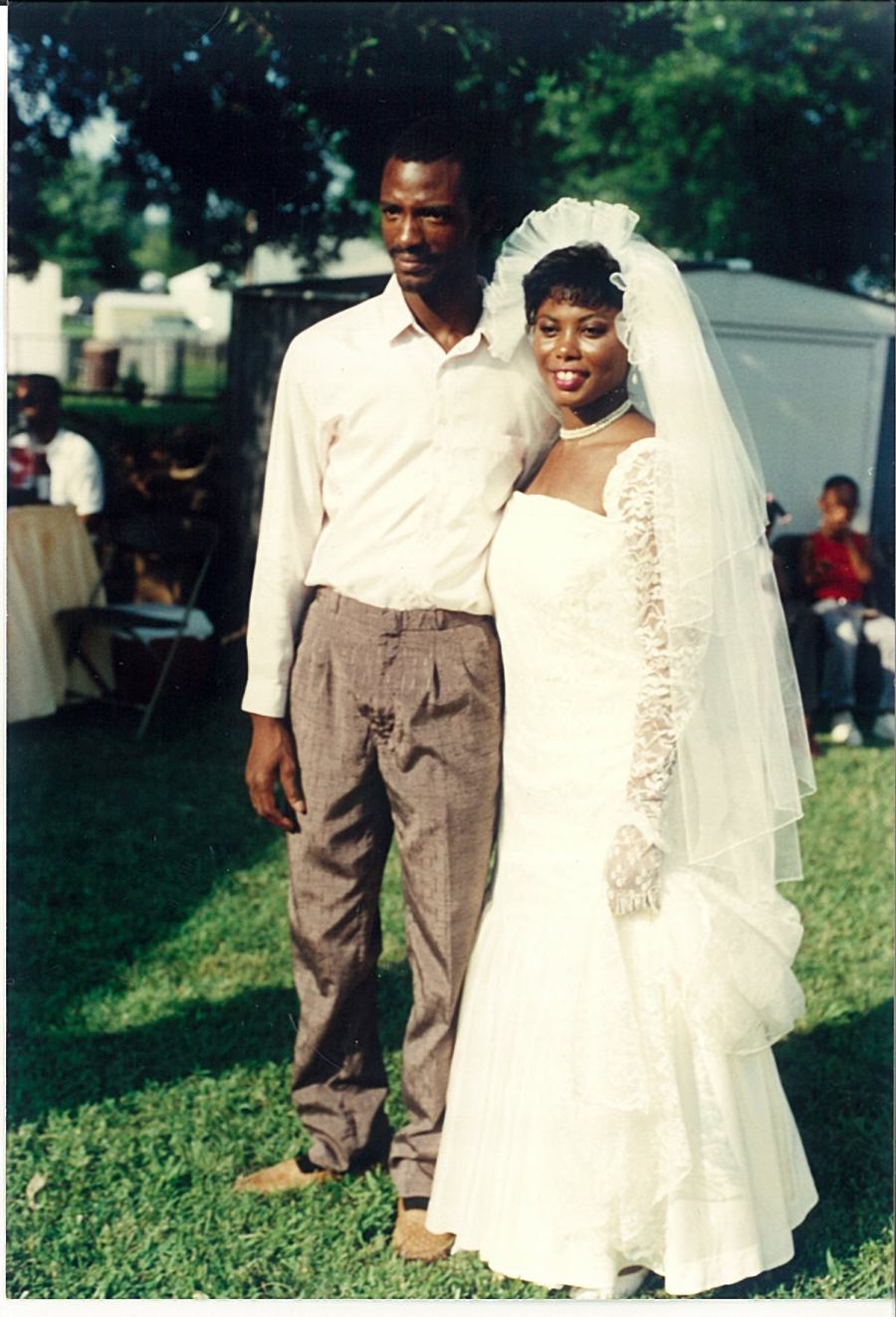
She says police refused to provide basic information about what happened that night. She kept calling the police and hospital, asking for details, but says she was only told that her brother was repeatedly combative, and then he died at the hospital. Police did not provide her the videos, or information from them.
Smalls ultimately filed a civil suit against the police this summer, alleging excessive force, wrongful death, denial of medical care and other claims, which the police categorically deny. That $25 million suit led to a court order forcing police to give Smalls the videos from that night.
She watched them for the first time last month, at her father’s house. “It was horrible,” she said, “a nightmare.”
Lambert’s father, Linwood Lambert Sr., 66, told MSNBC he doesn’t have the words to describe what he saw.
“I can’t say what I was thinking, it was awful,” he recalled. “You wouldn’t do any human or any species like that. I don’t think anyone could hate someone that bad to inflict pain such as what they did,” Lambert said. “I don’t see anything that he did in that tape,” Lambert added, “that would provoke them to do what they did.”
Gwendolyn Smalls’ lawyer, Tom Sweeney, argues the police broke the law because they used excessive force for the situation.
“The mere breaking of a door,” he said, “does not warrant the use of hundreds of thousands of volts being shocked into a person’s system on multiple occasions by multiple parties.”
Sweeney also stresses it is illegal to taser someone who is restrained and in custody.
“When someone is restrained,” he said, “you’re not allowed to taser them.”
The South Boston Police Department’s own rules state Taser use “is no longer justified once the subject has been restrained.”
When a tasered suspect needs medical help, those rules state officers may “take the suspect to the emergency room at the Halifax Regional Hospital,” and should do so “before” taking the suspect to jail. (The rule is General Order Number 211, effective since May 2007.)
Federal guidelines also strictly limit Taser use.
The Justice Department states that police should limit tasings to people showing “active aggression” – not passive individuals, or those “fleeing” without posing a separate danger. The guidelines discourage repeat tasering, noting that exposure lasting over 15 seconds can “increase the risk of serious injury or death and should be avoided.”
%22The%20mere%20breaking%20of%20a%20door%20does%20not%20warrant%20the%20use%20of%20hundreds%20of%20thousands%20of%20volts%20being%20shocked%20into%20a%20person%E2%80%99s%20system%20on%20multiple%20occasions%20by%20multiple%20parties.%22′
In fact, a 2011 federal review of “in-custody deaths” related to Tasers found “many are associated with continuous or repeated shocks.”
Taser International notes that most lab testing of Tasers hasn’t “exceeded 15 seconds,” and cautions police to “use the shortest duration” of tasing that is “objectively reasonable for lawful objectives.”
Jim Cavanaugh, a former ATF agent and NBC law enforcement analyst, reviewed extensive videos of the tasing incident. He concluded the officers deployed “improper use of force in every regard.”
“It’s excessive force through excessive use of a Taser,” he said, “on a prisoner who is in a dire medical condition, and is restrained already, and that’s very disturbing.”
Cavanaugh added, “it just hurts me to watch officers do that to the guy.”
“HE NEEDED A BAND-AID”
South Boston police declined to comment to MSNBC about the incident. Their lawyer, Jim Daniel, said “cases in litigation ought to be decided in the court system,” not through public comments.
In court filings in response to that civil case, the police deny all allegations that Lambert was mistreated. They say the use of force and repeat tasings were “appropriate and necessary,” because Lambert damaged property and posed a danger. As for the most severe charge, wrongful death, police point to Lambert’s autopsy, which lists “acute cocaine intoxication” as his cause of death. Lambert admitted to cocaine use that night, and the autopsy found he had “less than 0.01 mg/L” of cocaine in his blood – a relatively low level that could still account for an overdose. “Having a level of 5 mg/L or higher would be more consistent with death due to cocaine intoxication,” said Dr. Lewis Nelson, a medical toxologist and emergency medicine specialist at NYU. “Low levels don’t rule out cocaine as a cause of death,” Nelson told MSNBC, noting that a .01 level is “consistent with recreational use but could also be consistent with overdose.” The autopsy also found Lambert had three wounds suggestive of tasering on his body, and cited police accounts that he was “tased at distant and contact range.” Sweeney argues, however, that the autopsy was conducted without complete information about how many times Lambert was tased. “There’s a reference in the coroner’s report to tasing,” he said. “There’s no reference to the fact that Mr. Lambert was tasered multiple times, by multiple police officers at the same time while he was in the back of a police car, and subsequently died shortly after that,” he said. Sweeney wants to present independent medical testimony on how the repeated tasings may have contributed to Lambert’s death. The case is in the discovery stage, with a hearing scheduled for Thursday. If it goes to a trial, a judge would tell jurors to weigh all legitimate evidence regarding potential causes of death. (Sentara Halifax Regional Hospital declined to comment on the incident, when contacted by MSNBC in person and via email, citing open litigation against the police department.) Sweeney also argues a jury will be skeptical of how the entire police interaction evolved, since Lambert was taken into custody for medical help, not as a criminal suspect. Lambert did have a lengthy criminal record, including drug felonies and driving felonies, though Sweeney says that history is legally irrelevant in a case alleging excessive force. “The police didn’t know that when they were tasing him,” Sweeney said, “you can’t use the fact that he had interactions with the law before to justify unlawful use of force — you don’t lose your constitutional rights because you’ve been involved with the law before.” In filings to date, the police do not mention Lambert’s previous criminal record. In legal filings and statements, South Boston police have focused more on Lambert’s condition on the night in question. The officers not only maintain the tasings were legally justified – a question of force – but also that the tasings did not seriously injure Lambert that night – a question of medical fact. In depositions taken in early October, officers said Lambert’s injuries were either minor or not urgent. Officer Clay said Lambert could have any injuries treated at the jail, a more suitable place “if he needed more medical attention.” Officer Bratton was asked how she decided Lambert did not need immediate medical attention, based on his condition when officers left the hospital. She said he looked like “he needed a Band-Aid.” Sweeney has a different view of the night’s events, arguing the tasing was especially objectionable because it was so evident Lambert needed medical help. “The video is a horrifying thing to watch,” Sweeney said, because Lambert is clearly “in trouble, in noticeable respiratory distress,” and yet police still taser him repeatedly and deny him medical care. Smalls is even more emphatic. “Taser is what killed my brother,” she says, “the continuous hold of fifty thousand volts of electricity going into his body.” “HE AGAIN WAS COMBATIVE” While the legal case turns most on the conduct that night – did officers use excessive force, did Lambert repeatedly provoke them? – MSNBC’s investigation also found medical records indicating police made statements after Lambert’s death that appear to be contradicted by their own videos – and by later accounts of the night. In the hospital’s official rescue incident report, ambulance workers state police told them Lambert was “combative” at two instances when the video appears to show otherwise. First, it states police said Lambert was “very combative” when they encountered him at the hotel, although ultimately “were able to detain [him] with assistance from other officers.” But the video shows Lambert walking out the hotel with the officers voluntarily. In addition, the officers neither asserted Lambert was under arrest at the time, nor do their later statements allege a physical altercation at the hotel. Second, the hospital report states that after leaving the hospital, police say they took Lambert “to the jail where he again was combative. After they finally got him to the ground he was in the prone position and he calmed down. Then they realized that the patient was not breathing and they started CPR.” That claim of another combative, physical altercation also appears to be false – the video shows Lambert was unconscious on arrival at the jail, and officers can be seen dragging his limp body out of the car. “The story in the ambulance record is markedly different than what actually happened,” Sweeney told MSNBC, citing the ambulance workers’ account of police statements. “I’m not saying they lied,” Sweeney said of the officers, “but that he is combative and alive at the jail is demonstrably untrue.” However the misinformation made it into the hospital report, it was some of the only information Lambert’s family received about that night. When they first filed their lawsuit, Sweeney notes, he “only had those medical records” for an account of what happened at the jail, (not the video or extensive police statements). It is important to note the officers also filed incident reports within days of Lambert’s death, obtained by MSNBC, which depict the jailhouse events consistent with the videos. The reports accurately note Lambert was “quiet on the ride to the jail” and “not breathing” on arrival. In addition, police briefs filed this year do not allege an altercation at the jail. Smalls, Lambert’s sister, believes the police sought to make Lambert sound more combative than he actually was. Ultimately, she says real justice won’t come from her civil suit. She wants to see the officers held accountable in jail. Virginia State Police conducted an investigation of the incident. A State Police spokesperson, Corrine Geller, told MSNBC State Police “initiated the investigation at the request” of South Boston Police Chief James Binner, and it “turned its findings over” to two prosecutors “for final review and adjudication.” The original prosecutor, Halifax County attorney Tracy Quackenbush Martin, has been investigating the case since 2013. “The investigation remains open,” she told MSNBC this week. She said a second prosecutor, Michael Herring, was appointed this year to work for her on the case, in order to enhance “public confidence” in the process, given his experience with similar matters in the past. According to police records from March 2015, obtained by MSNBC, a South Boston police officer said Ms. Martin told him she thought the officers were not at “criminal fault” for Lambert’s death. The officer, Lt. D. W. Barker, wrote that Martin met with him and another police official about the investigation, and “advised that she had looked into the matter and felt that the officers had no criminal fault in the investigation,” but she also wanted another prosecutor “assigned to the case to review everything behind her.” Ms. Martin did not dispute Lt. Barker’s statement in an interview with MSNBC this week, but said “it would be premature to comment on a preliminary opinion when the investigation is still pending. I will withhold a final judgment until my investigation is complete.” Over two years after the State Police investigation and Martin’s investigation, there have been no charges in the case. All three officers have been promoted. MSNBC’s Jamie Novogrod contributed to this report. Watch the longer raw footage in the video below:
Ari Melber
Ari Melber, an Emmy Award-winning journalist, writer and attorney, is the host of “The Beat with Ari Melber” airing nightly at 6 p.m. ET on MSNBC. He also serves as MSNBC’s chief legal correspondent and an NBC News legal analyst. Before joining MSNBC, Melber practiced First Amendment law and served as a legislative aide in the U.S. Senate. He received a J.D. from Cornell Law School and is a member of the New York Bar. Recommended


Timeline – May 4, 2013
