








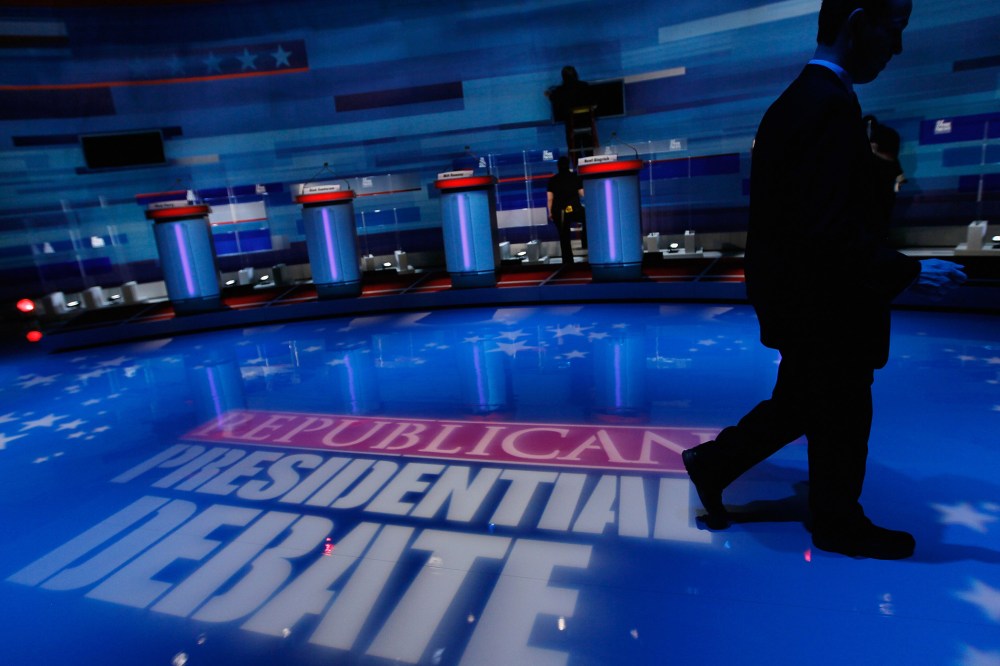
Republican campaigns agreed to take a larger role in negotiating the parameters of the upcoming presidential debates and largely cut the Republican National Committee out of the process during an unprecedented meeting of advisors for all but one campaign on Sunday night.
It was a signal that efforts from the RNC to alleviate long-simmering frustrations from the campaigns over the debates — which came to a boil last week after the debate hosted by CNBC — a sister channel of NBC News and MSNBC — had fallen short.
On Sunday, the RNC told campaigns that it was appointing RNC Chief Operating Officer Sean Cairncross to assist with debate negotiations. On Friday, the committee announced it would suspend the next debate hosted by NBC News and Telemundo over the way the CNBC debate played out, which campaigns have complained was poorly moderated and intended more to bruise the candidates than enlighten the voters.
Lindsey Graham campaign manager Christian Ferry called the Republican presidential campaigns dinner meeting “an extremely productive evening.”
RELATED: Debating the debate format
There is a starting point for the GOP operatives, “we agreed that we would like the campaigns to negotiate with the networks on format going forward,” Ferry said and “continue to have the RNC help with logistics.”
According to Ben Carson campaign manager Barry Bennett, the campaigns all agreed to circulate a questionnaire to the networks hosting the debates asking for details on their planned formats, the moderators, how long the debate will go, among other details.
The campaigns will hold a conference call prior to each debate to hammer out the details on a case-by-case basis, during which Bennett said he expects other issues of contention — like whether to hold an undercard debate, and how to get more candidates involved in the main debate — to be ironed out.
All campaigns agreed they want to limit the debates to two hours, allow each candidate to get 30 seconds each for opening and closing statements, have final approval of on-screen graphics, and figure out a way for the candidates to get more equal speaking time.
Bennett said the issue of whether or how to hold an undercard debate is left to the individual broadcaster, and will be discussed on a case-by-case basis with the networks. He indicated that the bigger campaigns would be calling the shots, warning that they could boycott the debates if their demands aren’t met.
“A couple of us are the ones that are generating the ratings for these debates — if we don’t come that’s a big bargaining chip,” he said.
Bennett had floated before the meeting the possibility of taking television networks out of the equation altogether and broadcasting the events online in partnership with Google or Facebook. he also suggested “varying formats” for upcoming debates, but said there was no agreement on what that meant.
“It’s really hard to get 15 people to agree to a particular format. But I would hope, from the Carson campaign’s perspective, that they could be a little more creative than they have been,” he said.
After the meeting, Carson told reporters during a stop in Panama City, Fla. that it “marked progress.”
RELATED: The scariest issue the Republican field won’t address
“I think there’s general agreement that the last debate was a farce and that something needs to be done about it,” he said. “It’s a waste of everyone’s time when you do it that way, and sometimes things have to get pretty bad before people take action.”
But aside from the agreement to take a greater role in the process, little consensus on specific details came out of the meeting and one key issue of contention — whether to reinstate the NBC News – Telemundo debate — remains.
Sources within the room say the Jeb Bush campaign pushed to reinstate the debate, which is the only one being held with a Spanish-language outlet as a host, but Trump campaign manager Corey Lewandowski pushed back, threatening to boycott if it is reinstated.
The meeting had been long in the making. The RNC decided before the presidential cycle began to take more control over the debates in an effort to avoid the long slog of bruising primary debates that many believe weakened eventual nominee Mitt Romney during the 2012 cycle. But the decision by the campaigns to wrench more control away from the RNC suggests that effort backfired. Attendees at the meeting emphasized that the RNC will, however, continue to have a role in hammering out disagreements between the networks and the campaigns and making logistical arrangements, and will still be involved in the negotiations. Ben Ginsberg, the GOP lawyer who moderated the discussion, said that the decision by the campaigns to take back control over the process from the RNC marked a “course correction. The campaigns, he said, “all want a greater transparency and accountability in the way the debate process is working.” One complaint, Bennett said, is that campaigns aren’t given enough of a heads’ up on the plans for each debate, making it difficult to schedule in prep time. Ginsberg, who’s been involved in negotiating the details of the debates for the RNC in the past, said the process would mirror negotiations from the past two cycles, where the campaigns were more involved in debate negotiations. That “produced a better set of debates than what the campaigns have had so far this cycle,” he said. But Ginsberg acknowledged that some of the chaos the candidates have seen so far is simply a result of the unprecedented size of the GOP field, though he expressed optimism that could be overcome. “I think a larger field means more challenges, but it’s abundance of riches for the Republican party, and debates ought to reflect the abundance of riches as opposed to a lotta gotcha questions,” he said. All campaigns sent advisers, except for Carly Fiorina’s, who said this weekend because of logistical issues her campaign wouldn’t be represented. Though their candidates spend much of their time blasting each other on the stump, attendees said the meeting was cordial — Bennett said attendees even joked around with each other. “It really was a fun Sunday dinner with a bunch of old friends,” Ginsberg said.
Alex Jaffe Recommended


