








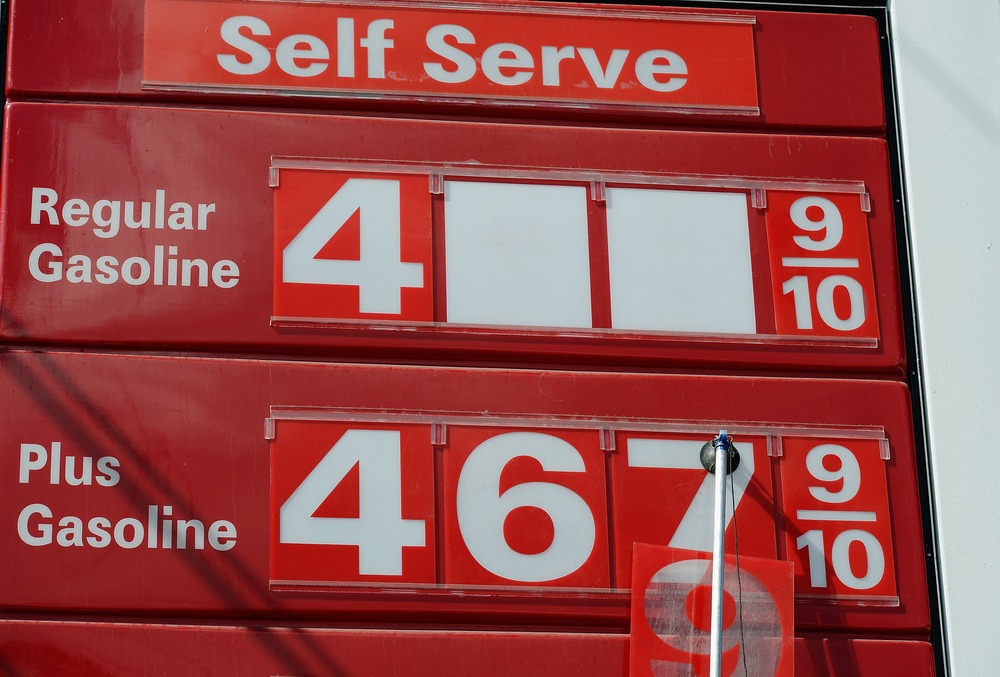
Gas prices have been used as a weapon in American presidential campaigns since they doubled under Jimmy Carter after the Iranian revolution. Yet, the president of the United States has very little control of gasoline prices, which are set at the global level.
A voter raised this subject during Tuesday’s presidential debate and neither candidate balked.
“Our energy secretary, Steven Chu, has now been on record three times stating it’s not policy of his department to help lower gas prices,” asked the individual. “Do you agree with Secretary Chu that this is not the job of the Energy Department?”
Mitt Romney went on to argue at length that President Obama’s policies had driven up gas prices.
“The proof of whether a strategy’s working or not is what you’re paying at the pump. … but you’re paying more [under Obama],” he said.
Romney again railed against Obama on gas prices at a campaign event on Wednesday, saying the president is “running on fumes.” The Republican candidate continues to argue that more drilling and more pipelines translate to lower prices at the pump.
Yet, economists and analysts across the political spectrum (AEI, Cato, Yale, etc.) say more domestic drilling is unlikely to impact prices.
If more drilling and pipelines did lead to lower domestic prices, we’d already have seen it under the Obama administration. Oil production has steadily increased since he took office. Last year, for the first time since 1949, the United States exported more gasoline, heating oil and diesel fuel than it imported.
The president sought to drive this point home Tuesday night.
“When I took office, the price of gasoline was $1.80, $1.86. Why is that?” he asked. “Because the economy was on the verge of collapse, because we were about to go through the worst recession since the Great Depression.” Booming economies mean people and companies are using more oil, and it tends to drive global prices up. When economies dwindle, we feel the opposite effect. The state of one economy is just one of many factors influencing global fuel markets. Public understanding of this issue is something of a pendulum. A March Bloomberg poll found that 66% of Americans blamed “oil companies and Middle East nations” for high gas prices while 23% blamed Obama’s energy policies. Blaming the Middle East hits closer to the truth, because violence, conflict, and natural disasters in those countries can disrupt oil production, throwing off supplies and driving prices up. As for big oil companies, lower prices for us can mean lower profits for them. While the president’s energy policies don’t really determine what we pay at the pump, it can impact the environment, the economy, jobs, and the future of our energy security.
Quinn Wonderling Recommended


