








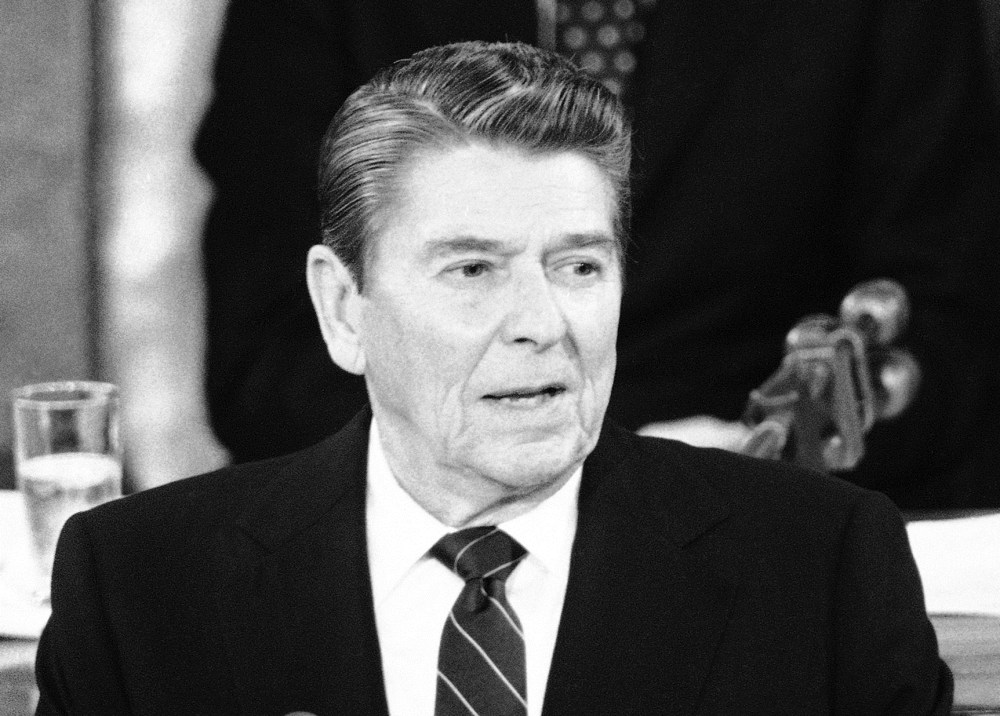
In the modern era, only three presidents—Reagan in 1985, Clinton in 1997, and Bush in 2005—have had the opportunity that President Obama has: laying out a second term agenda in a State of the Union address. The addresses offered those presidents a chance to offer bold initiatives, unfettered by reelection concerns and reservations about spending political capital. But often, the bulk of the agenda simply fails to gain traction.
In 1985, President Reagan made news by calling for dramatically lower tax rates to change a system he said “is unfair and limits our potential for growth.” In October of the following year, he made good on that promise, cutting the top income tax rate from 50% to 28% and eliminating billions in tax loopholes.
But in that same State of the Union, Reagan may have planted the seeds of the Iran-Contra affair that overshadowed his second term. “We must not break faith with those who are risking their lives-on every continent, from Afghanistan to Nicaragua,” Reagan told Congress. “To defy Soviet-supported aggression and secure rights which have been ours from birth.” Labeled the “Reagan Doctrine”, the president pursued it selectively and, in some cases, secretly. News of secret arms sales to Iran in contradiction to Reagan’s stated policy of staying neutral in the Iran-Iraq war led to revelations about the profits being funneled to Nicaraguan rebels—the Contras in the Iran-Contra affair.
Those are just two examples of the promise and pitfalls that can exist in laying out extensive agendas weighted down by multiple issues. It happened with Bill Clinton as well. In 1997, he pitched education reform as the centerpiece of his State of the Union—a plan that was ultimately blocked in the House. But the same speech laid the groundwork for the Balanced Budget Act of 1997, the State Childrens’ Health Insurance Program and the beginnings of McCain-Feingold finance reform. Social Security reform was at the heart of the first address of President Bush’s second term. It was a bust almost from the beginning and had fallen off the political radar by the fall. But remember that national security was also a headline from that speech—and the underpinning of his entire second term. “Our responsibility to future generations is to leave them an America that is safe from danger, and protected by peace,” Bush said. “We will pass along to our children all the freedoms we enjoy—and chief among them is freedom from fear.”
David Murphy Recommended


