








While there were many successes in President Obama’s first term, his attention to the environment left many wanting. So after devoting two surprising paragraphs to climate change during his second inaugural address, what more must President Obama do to quiet his detractors in the green movement?
The president’s speech also tied in how economically beneficial green jobs could be. “We cannot cede to other nations the technology that will power new jobs and new industries,” he said. “We must claim its promise. That’s how we will maintain our economic vitality and our national treasure, our forests and waterways, our crop lands and snow-capped peaks.”
The president’s commitment to taking action on the environment and energy could be tested sooner rather than later. Last week, Nebraska Governor Dave Heineman approved a plan that would allow a portion of the Keystone XL oil pipeline to run through his state. The administration has put off any decision on the pipeline’s fate until March.
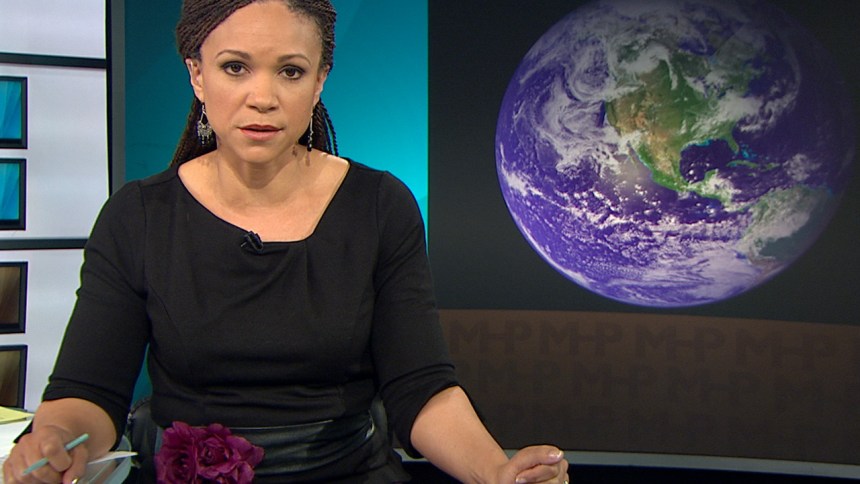
But does all the weight of an issue as big as climate change fall on the White House? Host Melissa Harris-Perry took a look Sunday at, not just the president’s inaugural argument for action, and what form that action might take—but also the modern-day green movement, environmental justice and the science being taught to kids.
Mike Weilbacher, the executive director of the Schuylkill Center for Environmental Education, rebuked those that choose to deny the science. “I’m not sure what science people are waiting for at this point, because there’s so much science in and more science coming in all the time,” he said. He went on to talk about the importance of the president mentioning climate change in his speech saying, “So the more he talks about it, if he makes it center stage that could be a game changer, even what he does is fine but just talking about it is going to bring it into the forefront.”
While the idea of climate change being at the forefront in Washington D.C. is encouraging, is it realistic to think that anything will get done in a Congress that has been so divided? Ari Berman, contributing writer for The Nation noted how environmental policy is not just the president’s responsibility, “Well the thing is its not just Obama right? I mean the failure of cap-and-trade wasn’t just through the administration, it was through the Congress. And not just Republicans in congress but also democrats in Congress—a lot of who had ties to coal, nuclear, oil, et cetera, et cetera. I feel like the climate change debate is moving but it’s sort of like the gun control debate but further behind.”
NBC Latino contributor Victoria DeFrancesco Soto noted the drawbacks of climate change being a divisive issue and what we can do to amend that. “I also think we need to think about diversity in techniques…the president making use of his executive orders, putting pressure on our state governments because there are areas, for example fracking, that are very unregulated and that we can look to the states to regulate.”
Yet the problem is not just about policy. Communities have felt the effects of climate change for years, whether it be the effects from Hurricane Katrina on the Gulf Coast or Hurricane Sandy on the East Coast. Peggy Shepard, co-founder and executive director of West Harlem Environmental Action, linked environmental justice and racial justice.
“You know we have been in a grassroots struggle to dismantle environmental racism, because it is people of color, indigenous peoples, low-income communities that bear the brunt of the disproportionate burden of pollution in our communities… And often our land in our communities is cheaper. And so we have really born this disparate burden and it’s lead to increasing health disparities.” A lack of development in green jobs was also a topic of discussion. Berman noted how green jobs have to be part of the path forward. “And that’s where the green movement needs to go, and that’s how Obama will pitch it in the second term. The green movement is jobs. This is the future of jobs in this country. This is how we’re going to create the jobs of the future is through investments in green technology and I think that’s been a missing piece of how he talked about the environment in his first term.” Weilbacher addressed environmental literacy for everyone, advocating informing kids about science so they want to be engaged as citizens. “Environmental literacy is a huge issue because you have multiple things that kids should be literate on.” He detailed how that literacy can occur, saying: “You have to ask kids the questions and let them do the exploration to find the answers, not give them a lecture on it.” “Imagine a high school environmental class where people who on both sides of the equation come in and talk to the kids, the kids ask questions of them, the kids then get to have their own debate and let the kids make up their own mind what they think. But we don’t even do that.” See below the remainder of our Sunday conversation on climate change.
Shanta Covington Recommended


