








As the nation grapples with measures to prevent another tragedy like the one last month in Newtown, Conn., one thing most people can agree on is the importance of reforming America’s mental health system.
One of the four pillars of President Obama’s 23-point plan to reduce gun violence focuses on increasing access to mental health services, and a new piece of gun legislation passed in New York deals with the issue of mental health care. But Americans still have a long way to go before the scope of mental illness is fully defined—and the stigma attached to it fully erased.
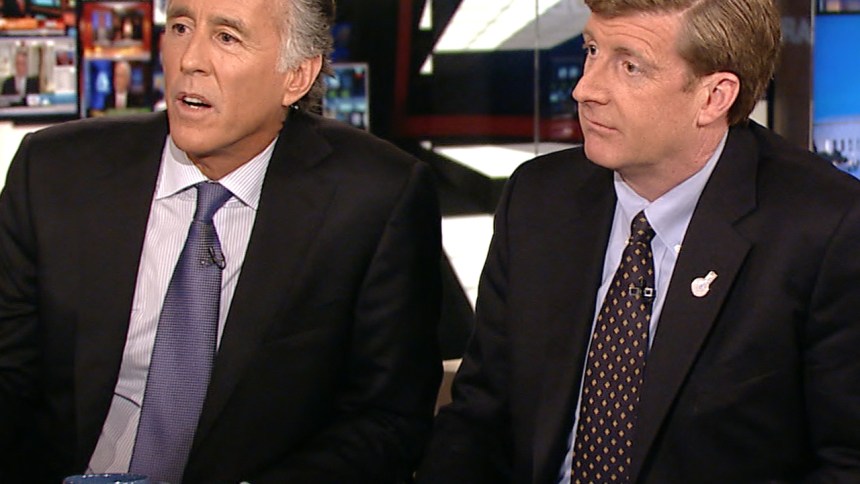
“My dad was old school and looked at [addiction] as a kind of character flaw,” said Fmr. U.S. Congressman Patrick Kennedy, D-R.I., who is the son of the late Senator Ted Kennedy, on Hardball Thursday. “And that’s the way America looks at it these days. We still have to come to the realization that these are chemistry issues, not character issues.”
Addiction disorders are closely related to mental illness although the exact relationship between the two is not entirely clear. Both Patrick Kennedy and his cousin Christopher Kennedy Lawford, who is the author of the new book, Recover to Live: Kick Any Habit, Manage Any Addiction, know firsthand the struggles of overcoming addiction.
“I started using drugs when I was 12, I had genetic front-loading, I also had trauma,” said Lawford on Hardball Thursday. “And we know from the studies at the NIH that these things together make you a real candidate for this disease.”
The NIH, or National Institutes of Health, is the agency of the U.S. Department of Health and Human Services that deals with medical research. According to the National Institute of Mental Health (NIMH), one of the institutes that makes up the NIH, approximately 26% of adults and 20% of children in America suffer from a diagnosable mental disorder in a given year.
But like virtually every other government agency, the NIH is in danger of facing serious cutbacks at the hand of Washington dysfunction. If lawmakers do not find a way to avert the impending sequestration cuts, the NIH will lose 6.4% of its budget.
“We have seen in the last 10 years basically an erosion of our buying power for medical research by about 20%, simply because the budget has been flat and inflation has been chewing away at that,” NIH director Francis Collins told Politico in an interview Monday. The 6.4% cut would be a “profound and devastating blow,” said Collins.
However, the recent mass shootings in Connecticut, Colorado, and Arizona committed by people with apparently severe mental illnesses place significant pressure on Congress to invest heavily in a mental health overhaul. So far, Obama’s recommendations for improving mental health services have come under fire for not doing enough to tackle the issue. Dr. E. Fuller Torrey, the founder of the Treatment Advocacy Center, criticized Obama’s plan as “largely disappointing,” and insisted that the president expand public psychiatric facilities and put pressure on certain states to reform their civil commitment statutes. “The commitment statutes in states such as Connecticut make it virtually impossible to evaluate and treat people like Adam Lanza until they have already demonstrated dangerous behavior,” writes Torrey. President Obama closed his gun control announcement on Wednesday with emotionally charged remarks about Grace McDonnell, a 7-year-old victim of the Newtown massacre. He said that, “When it comes to protecting the most vulnerable among us, we must act now—for Grace. For the 25 other innocent children and devoted educators who had so much left to give.” But as Patrick Kennedy noted on Hardball Friday, it is not just the victims killed in violent crimes that make it necessary to act on issues like gun control and mental health care; it’s also the people they leave behind. “It’s not just the person that’s killed, like my uncles. It’s the whole family,” said Kennedy. “So my father survived, but I can tell you, he had post-traumatic stress, and that communicated itself to me. He was in mourning the rest of his life. He suffered tremendously. And all of my cousins who grew up without a father were also victims. And that’s what we lose sight of. It’s not just the kids that are killed up in Newtown or out in Colorado. It’s all their families who are also victims.”
Emma Margolin
Emma Margolin is a reporter at MSNBC.com. Recommended


