








There’s a new normal in the Senate–at least for now.
Democrats and Republicans came to an agreement on filibuster rules Tuesday morning, averting threats of a Harry Reid “nuclear option” (and the GOP ire that would have come with it), allowing most of the president’s nominations to proceed unobstructed. The deal’s bottom line is that Democrats will leave filibuster rules in place and Senate Republicans will confirm nominations of several Obama cabinet members. The deal is considered a win for the president. But while the nuclear option was averted this time, it remains on the table for future conflicts.
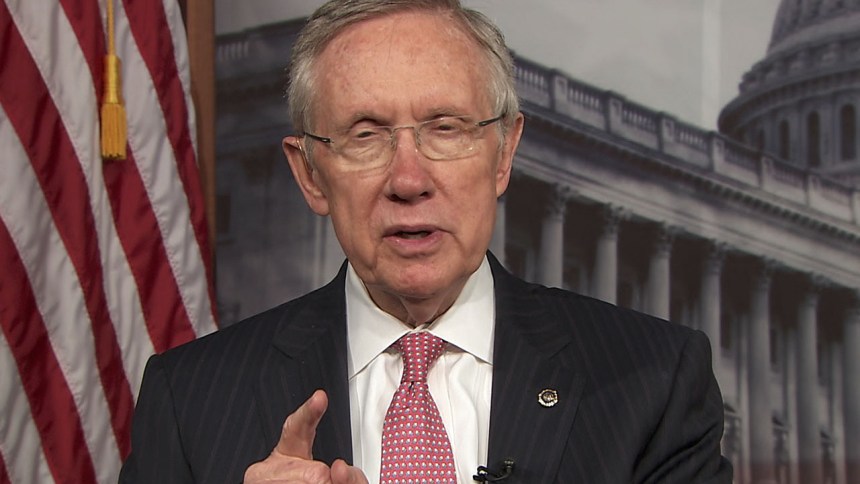
Majority Leader Harry Reid explained to Chris Hayes on Tuesday night that he needs to keep that option. “I have to have the ability to protect not only the Senate, but the country…Listen, they wanna filibuster, let them filibuster. And we’ll override those filibusters and if they get too out of hand, we’ll revisit all of these things again.” This is the third time the nuclear threat has been given in the past two and half years, but Reid felt comfortable saying that the three-plus hour long meeting in the Old Senate chambers on Monday night marked “a new norm” for the Senate.
Use of the nuclear option has been brought up twice before during Reid’s leadership. While an important tool to break through gridlock, the nature of D.C. politics means that as much as it can help, it can also hurt. “There’s recognition on both sides that the shoe can be on the other foot rather quickly and that people in the majority today will be in the minority tomorrow, and vice versa,” said Texas Republican John Cornyn. The GOP attempted to invoke this tactic in 2005.
But while the nuclear option might not be the solution, it’s clear that the Senate’s business as usual hasn’t been working. Reid recalled the filibusters that prolonged the confirmation hearings of Chuck Hagel for Secretary of Defense and John Brennan for head of the CIA, Reid said that a nine month wait time has become the average for cabinet nominees.
Reid, who in 2008 promised never to use the nuclear option if he were in the position of Majority Leader, explained that the times, the system, and the nature of the issues being debated have changed. “That was a different time, a different issue. That dealt with life time appointments. Now we’re talking about the fact that a president should have the ability to put his team together. The fact is: things have broken down very much since [2008].” Another key part of the filibuster deal was the mounting public tension between Reid and Minority Leader Mitch McConnell. Just last week the Kentucky Republican responded to threat of a nuclear option by saying “if we don’t pull back from the brink here, my friend, the majority leader, is going to be remembered as the worst leader of the Senate ever.” But Harry Reid said that even if bestowed a magic wand with which to change the players in the Senate game, the problem isn’t between him and McConnell. “This is about having the function of the Senate be what it should be. This is not about us…especially with what’s going on in the House, we need to have an effective U.S. Senate and I think in the foreseeable future we’re going to have one. “ CFPB nominee Richard Cordray was confirmed Tuesday morning after the deal was announced, and outstanding nominees for such posts as head of the Environmental Protection Agency and Labor Department are expected to come to a vote later in the week. NLRB nominees Richard Griffin and Sharon Block have been rescinded, but Reid assured “I think they’re gonna be just fine,” alluding to a future in government for both “sometime in the near future.”
Ali Vitali is MS NOW's senior congressional correspondent and the host of "Way Too Early." She is the author of "Electable: Why America Hasn’t Put a Woman in the White House … Yet." Recommended


