








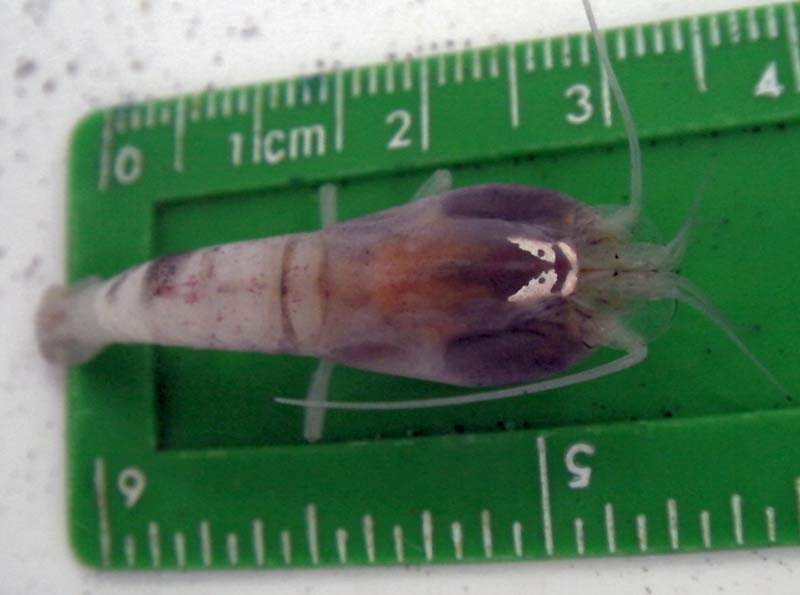
While browsing British reality show contestant bikini pictures doing research at the Daily Mail I saw this funny challenge:
Can God create a shrimp so hardy that he himself can’t boil it?
(You may have read the msnbc.com version, without the silly headline, here.)
Spoiler alert: As you might have guessed, this is heading for a debunking. If you promise not to drip cocktail sauce in my rabbit hole I’ll share what I learned.
One other preliminary point I feel should be made is that even if it turns out these are not uncookable shrimp, vent shrimp are pretty cool as are hydrothermal vent fauna generally. As one evolutionary scientists remarked, “Kevin described a new species today. What have you done?” I mostly googled stuff, so you’ll hear no judgments from me.
One thing the google did suggest is that while it’s exciting to discover new species, what seems most noteworthy about vent shrimp (aside from their ability to live in toxic conditions) is how they have managed to spread around the world. The fact that they’re all related but different is what seems to have captured the interest of a lot of scientists. (Credit to the Daily Mail, this is explained in their piece as well.)
Ok, to the question at hand: Step one is to find the original paper, which is thankfully free.
Ignoring the faulty temperature math in the Daily Mail headline, let’s make sure that these shrimp actually live in water that hot. The researchers appear to have looked at two vent fields, the Beebe Vent Field (BVF) and the Von Damm Vent Field (VDVF).
“Our analysis therefore indicates that an exit temperature of ~500 °C may be required to achieve the observed plume rise height of 1,100 m above the BVF.” … “The presence of anhydrite indicates vent fluid temperatures in excess of 140 °C at the VDVF.”
These quotes are probably not served well out of context, but at least we can say, yes, these are cookable temperatures. Wikipedia also gives us this handy diagram that includes some temperature data.
In case you’re curious, the paper also tells us, “The water at the bottom of the Cayman Trough is consistent with a modified North Atlantic Deep Water with salinity of 34.988 and temperatures of 3.98 °C…”
So the vents are cookin’ hot, but is that where the shrimps are? From Decapod crustaceans from hydrothermal vents and cold seeps: a review through 2005 (pdf), I find this: “[Rimicaris exoculata] is known only from sites along the MAR, where it occurs in active swarms that may be as dense as 2500 individuals per square metre and on chimney walls where temperatures range from 15 to 30 °C.”
Those aren’t the same shrimp, but they’re closely related and while I think the vents in the new paper are deeper and hotter than the “MAR” (Mid-Atlantic Ridge), it seems not entirely unreasonable draw habitat parallels.
So what’s coming out of the vent is wicked hot, but the chimney walls, not so much. 30°C is 86°F, which is pretty warm water, but not cookin’ warm, right? What exactly is cooking temperature? All of the meat temperature cooking guides I looked at get vague when it comes to shrimp. No one sticks a meat thermometer in a shrimp when they cook it. Boiling for 3-4 minutes doesn’t really tell me anything. Neither does grilling at 350°. But how about this: if we figure a shrimp is just a protein blob with legs, how much heat does it take to do to protein whatever it is that cooking does? What cooking does to protein is called denaturation, which the internet is happy to explain in charts, animations, and videos. Basically what we’re talking about is the energy needed to break some of the molecular bonds within the protein. Without getting lost in the chemistry, the answer we’re looking for is 41°C, or just shy of 106°F. The melting temperature varies for different proteins, but temperatures above 41°C (105.8°F) will break the interactions in many proteins and denature them. This temperature is not that much higher than normal body temperature (37°C or 98.6°F), so this fact demonstrates how dangerous a high fever can be. Unless there’s a great consideration for the insulating power of the shrimp exoskeleton that I’m ignoring, that should be enough to kill the shrimp at least, even if it is a pretty far cry from what the barbie cranks out. Ok culinary marine biologists, have at it. 🙂Recommended



