








Updated 12:30 p.m.
The Texas omnibus abortion law that state Senator Wendy Davis tried to block with a 13-hour filibuster is headed to court.
A trio of women’s and civil liberties groups–Planned Parenthood, the Center for Reproductive Rights and the ACLU of Texas–filed a federal lawsuit Friday against some provisions of the law, including restrictions on medication abortion and the regulations openly intended to shut down many of Texas’s abortion clinics. They were joined by more than a dozen Texas women’s health providers.
“I grew up in Texas and learned pretty early on that women only got what they fought for,” Cecile Richards, president of Planned Parenthood Federation, told reporters in a call Friday morning. “I think folks in the state have never fought harder.”
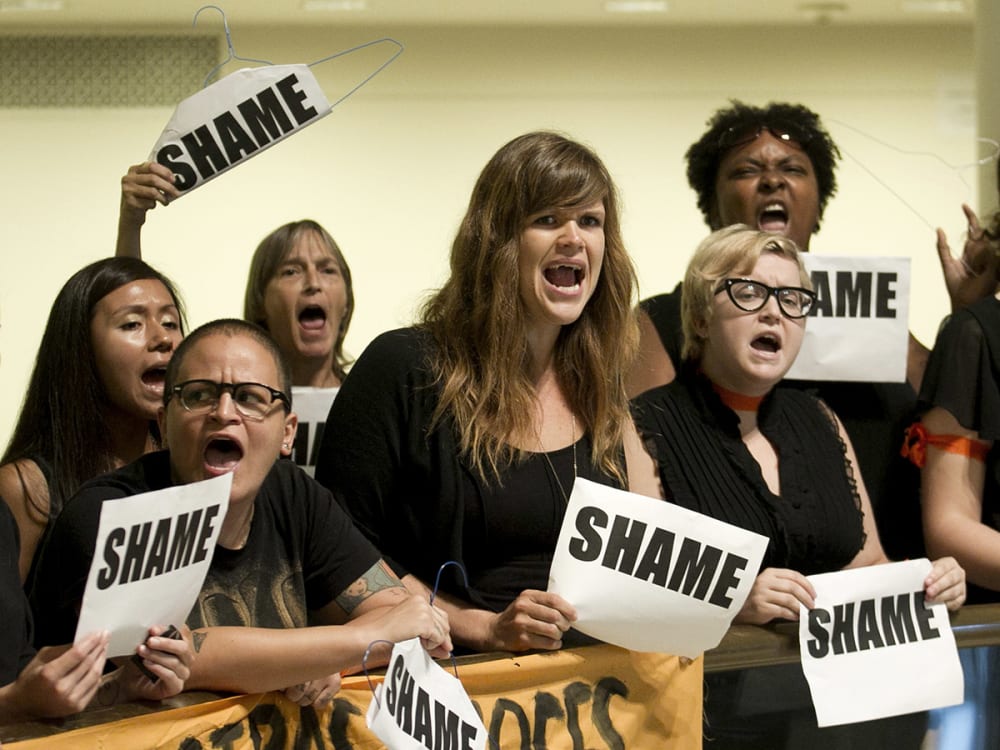
But the political odds were stacked against them, and the law ultimately cleared the Texas Legislature and was signed into law by Gov. Rick Perry. “Women shouldn’t have to go to court after every legislative session,” said Nancy Northup, president and CEO of the Center for Reproductive Rights. She added, “Women’s rights now depend on where they live.”
The clinic restrictions require abortion providers to have admitting privileges at a hospital less than 30 miles away. The women’s groups argue that “rather than protecting women’s health, the Act will harm Texas women. It will also violate Plaintiffs’ and their patients’ rights guaranteed by the Fourteenth Amendment to the United States Constitution.” The law goes into effect Oct. 29–unless is is blocked in court.
The Dallas Morning News reported earlier this month that at least four and possibly up to seven clinics that provide abortions would shut down because of an inability to meet these requirements. A similar law intended to close Mississippi’s last abortion clinic has been enjoined in federal court, and a trial is expected in the coming months. Similar abortion-related admitting privileges requirements were blocked in Alabama, North Dakota, and Wisconsin.
The medication abortion provision of the law requires following FDA protocol for administration of the abortion pill, despite the fact that more recent off-label use has shown that a lower dose has fewer side effects. The Supreme Court expressed interest in hearing a challenge to a similar law in Oklahoma in its upcoming term, pending a response from Oklahoma’s Supreme Court.
Notably, the groups are not challenging the provision of the law that bans abortion after 20 weeks.
“The simple answer is that you can only do so much at once,” Jim George, a litigator on the case at George Brothers Kincaid & Horton LLP, told reporters Friday. Abortions after 20 weeks, he said, “are relatively rare and the immediate problem we’re facing here is that there are large parts of Texas that would be effectively precluded from ever getting an abortion by the statutes.” There is also a strategic reason to avoid challenging that ban: Similar laws in Arizona and Idaho were twice found unconstitutional in the Ninth Circuit of Appeals, which is considered more liberal, but a Texas challenge would go to the conservative Fifth Circuit. Not only would that court potentially uphold the law despite it blatantly violating Supreme Court precedent, as it did with previous restrictions, the combination of decisions would create a split in the circuits that would make the Supreme Court likelier to hear it. Given the current composition of the court and Justice Anthony Kennedy’s unsteady support for abortion rights, that’s a risk pro-choice organizations are unwilling to take. The suit was filed in the U.S. District Court for the Western District, Austin Division. The court move comes days before Davis is expected to announce her candidacy for governor after coming into the national spotlight for her stand against the bill that ultimately cleared the Texas Legislature and was signed into law by Gov. Rick Perry. Related: The Right’s Plan to Reverse Roe
Irin Carmon Recommended


