








Republicans are still looking for ways to buck the Affordable Care Act, President Obama’s signature legislative achievement, even as it nears implementation.
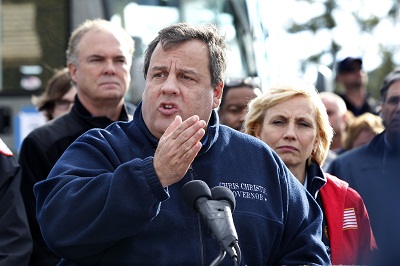
Governor Chris Christie (R-N.J.) added his name Thursday to the growing list of Republican governors refusing to create an “exchange” or insurance marketplace within their states—a key provision that the Supreme Court ruled optional last spring.
More than a dozen Republican governors, including John Kasich (R-Ohio), Rick Perry (R-Texas), Scott Walker (R-Wisc.) and Bobby Jindal (R-La.) rejected the option, handing over that power to the federal government which, under the Supreme Court’s ruling, can create a national insurance marketplace in the states’ absence.
Attacking Obamacare at the state level is one of the few options left for Republicans in the nearly three year legal and political battle over a law that’s been green-lit by the nation’s highest court and, effectively, by Obama’s re-election.
House Speaker John Boehner (R-Ohio) wrote in the Cincinnati Enquirer two weeks after the election, “There are essentially three major routes to repeal of the president’s law: the courts, the presidential election process and the congressional oversight process. With two of those three routes having come up short, the third and final one becomes more important than ever.”
House Republicans have indicated that, after failing to repeal the law in its entirety, they’ll focus on stonewalling its implementation. To that end, House Republicans sent subpoenas to Health and Human Services Secretary Kathleen Sebelius demanding she disclose how taxpayer dollars are being used to advertise the new law. Ways and Means committee Chairman Dave Camp (R-Mich.) charged in a statement that the Obama Administration “is either unwilling to disclose why they are using taxpayer dollars to market their unpopular law or are unable to keep track of how those taxpayer dollars are being spent.”
Governors have until December 14 to decide whether to implement state-based exchanges, but the fate of another major Obamacare provision is in their hands. Each governor will decide whether to expand Medicaid for people in his or her state who make up to 133% of the federal poverty level. Medicaid expansion, which is estimated to provide coverage for up to 17 million uninsured people nationwide over the next 10 years, was a key piece of the law that was also deemed optional in the Supreme Court ruling.
If the states don’t expand the Medicaid rolls, they risk losing federal funding for the program. And if they do expand, the federal government will pay for the new Medicaid beneficiaries in full for three years, tapering off to cover 90% of costs in 2020. Yet, nine Republican governors have said they won’t expand their state’s Medicaid rolls.
“These are able-bodied adults,” Governor Dennis Dugaard (R-S.D.) said Tuesday on why he won’t expand South Dakota’s Medicaid progam. “They’re not disabled; we already cover the disabled. They’re not children; we already cover children. These are adults—all of them.”
Some Republicans haven’t given up on a constitutional challenge to Obamacare despite the June Supreme Court ruling. Former Reagan and Bush administration lawyers David Rivkin Jr. and Lee Casey, who challenged Obamacare in court on behalf of 26 states, laid out a case in the Wall Street Journal for a constitutional challenge based on uniformity grounds.
They argue that since the Supreme Court ruled that the individual mandate—the part of the law requiring people to pay a penalty if they don’t buy insurance—can be considered a tax, that tax can’t be evenly applied across the country if some states, like some Republican governors have decided, don’t offer an insurance exchange or Medicaid expansion. “I think it’s a bit of a shot in the dark,” Stephen Vladeck, a professor at the American University Washington College of Law, told msnbc of the uniformity argument. Vladeck said that because the Supreme Court upheld the healthcare law as a tax, and because the tax is based on income, “the 16th Amendment, which allows for income taxes not to be uniform, supersedes the Uniformity Clause.” “It would be shooting the moon to absolutely convince the justices that the statute that they previously upheld would be unconstitutional because of a constitutional argument they’ve never accepted,” Vladeck said. “I think the challenges to the Affordable Care Act have always had a bit of a kitchen sink quality to them, where opponents would find any remotely plausible basis [on which to oppose it],” Vladeck said. “They lost the war so now I think they’re trying to chip away at the loss.”
Erin Delmore Recommended


