








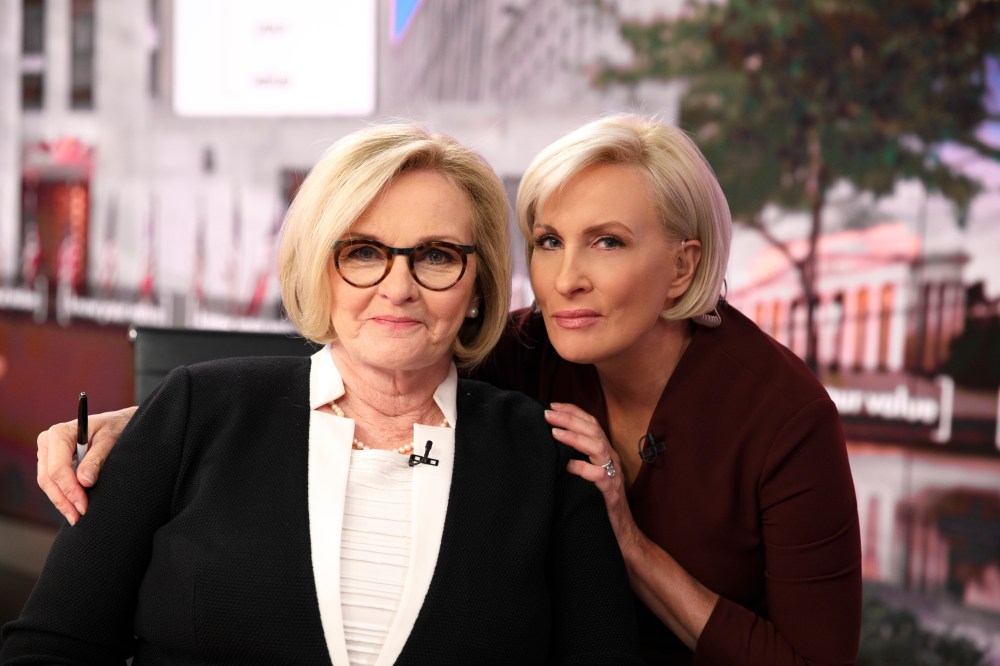
When you hear the word “leader,” what do you picture? Someone at a podium, perhaps, in a suit, making a rousing speech as he raises a fist?
“We tend to think of leadership as inherently male: commanding presence, booming voice,” said Mika Brzezinski, “Morning Joe” co-host and Know Your Value founder, in an interview.
“Growing up myself I was surrounded by male leaders in Washington and around the world,” Brzezinski added, referring to her childhood as the daughter of the late diplomat and national security advisor Zbigniew Brzezinski. “So, like many people, I was socialized to see leadership as a male quality.”
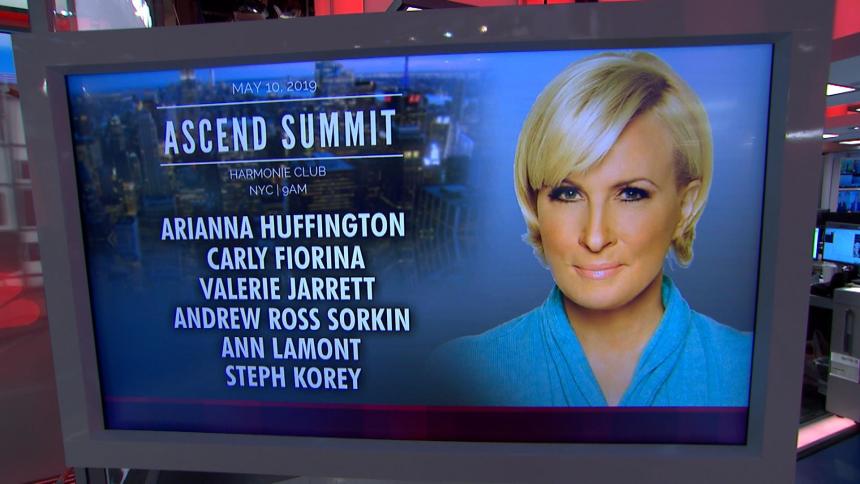
But over time, Brzezinski found herself drawn to a very different leadership style: one grounded in inspiring and organizing others, and one that’s “quieter” than the stereotypical leadership we imagine.
“For me, the booming voice — the loud screamer — isn’t the real leader in the end,” Brzezinski said. “To me leadership is someone who can galvanize, inspire, organize, manage, be fair but tough and command the respect of the room.”
But because people tend to think of leadership traits as male, women may count themselves out, Brzezinski said.
“I was not a born leader, and now I lead in many facets of my life,” she explained. “It can be learned. Because women actually have that leadership capability within themselves — we just don’t think it exists in there because of those stereotypes.”
Both Stacey Abrams, former minority leader of the Georgia House of Representatives, and Carly Fiorina, the former CEO of Hewlett Packard recently told Brzezinski that such stereotypes can, but shouldn’t, affect leadership.
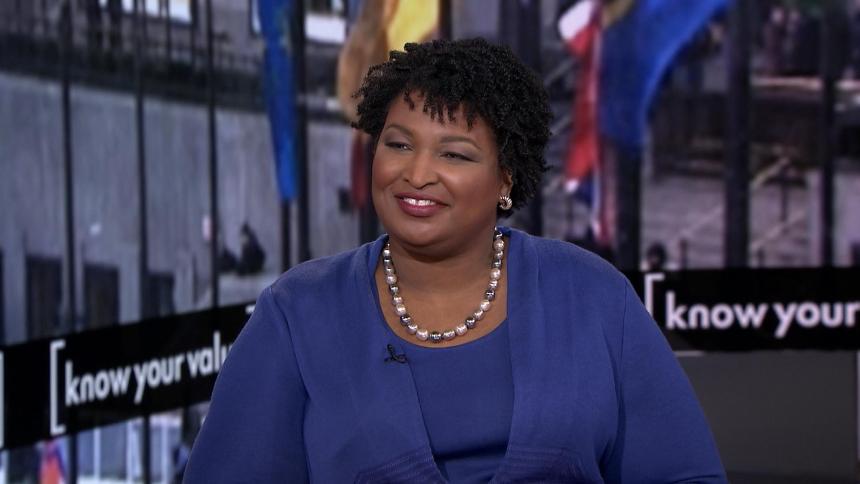
Abrams, who delivered the 2019 rebuttal to the State of the Union, said that often women are trained to disqualify themselves from leadership roles.
“I am a sturdy black woman with natural hair,” said Abrams, who is considering a 2020 presidential run. “When you close your eyes and imagine the person you think of as a leader, I’m likely not the image that pops into your head.”
She later noted that women, “particularly minority women, are trained to disqualify ourselves… My belief is I know who I am … and I’m never going to allow my exterior, my phenotype, to determine my capacity.”
And Fiorina, who was attacked by then-candidate Donald Trump for her looks in 2015, said in a separate interview with Brzezinski, “Leaders look different. Leadership is always the same.” Here are five leaders who inspire Brzezinski: Claire McCaskill, former Missouri senator and Know Your Value contributor: “She’s found her pocket. She found it as a prosecutor, she built it as a senator and she’s owning it as a television analyst. She’s all of it wrapped up in one. She’s got it.” Pope John Paul II made a major impression on a young Brzezinski, who said he “took the Catholic Church to a whole new level and brought in millions of young people around the world. His leadership style was always supremely gentle and quiet, yet so effective. My father introduced us, and I put out my two hands to kiss his ring, and instead he hugged me. This immediately debunked the idea that all leaders must be strong. It made me realize leadership is almost in the soul. Michelle Obama: “The way she is translating to millions of women around the world with her work and her book is truly incredible,” Brzezinski said of the former first lady. She is being exactly who she is and was before she went to the White House. She shows the softer voice, the voice without the platform, can inspire just as many people.” Nancy Pelosi, House Speaker: “Love, love, love, love, love her. And she’s 79. Take that, age discriminators! You cannot match the substance of Nancy Pelosi, who is beautifully handling this caucus and this president.” Jacinda Ardern, Prime Minister of New Zealand: “After the Christchurch mosque shootings in March, she wore hijab at the vigil and she changed the country’s gun policy in a matter of week. That is leadership. That is beauty. And again, it’s a quiet voice.”
Julianne Pepitone
Julianne is the senior technology writer for NBC News Digital, covering large consumer tech companies' (Apple, Google, Facebook, etc.) news and trends, as well as cybersecurity. She also writes and appears in original videos for NBCNews.com, and speaks as an expert guest on live shows across the NBC and MSNBC networks.
She previously worked at CNNMoney.com where she covered large techs from a business angle, as well as the intersection of the tech and media industries.
In addition to NBC and CNN online properties, Julianne has written for several national magazines and online publications including Esquire, Self, Popular Mechanics and Cosmopolitan. Recommended


