








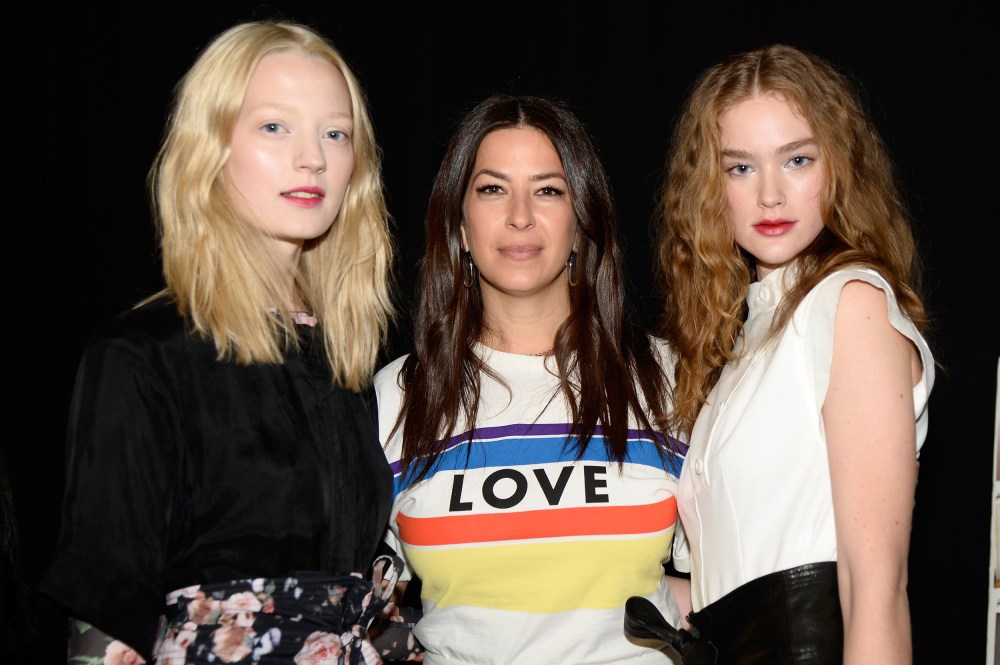
Designer Rebecca Minkoff has always supported women’s businesses, but her “a-ha” moment came during a meeting last summer. Minkoff was talking to the head of a company about working together for her namesake fashion brand and asked which of their businesses were female-owned. She wanted to work with just those brands.
“They said, ‘We don’t really have a way to do that,’” Minkoff told “Morning Joe” co-host and Know Your Value founder Mika Brzezinski during an interview that aired March 8, International Women’s Day. “It dawned on me: If they had a symbol on their roster denoting the female-founded companies, it would be far easier.”

In fact, a Berlin Cameron survey showed 82 percent of women shoppers are more likely to give their money to female-founded companies if they only they knew what they were.
So by September, Minkoff spearheaded the Female Founder Collective, which among other initiatives, designed a symbol shoppers or businesses can look for to quickly identify such companies.
It’s a “platform for female business leaders to connect and support each other, socially, legally and economically,” said Minkoff, who partnered with IMG and women-centered nonprofits across New York.
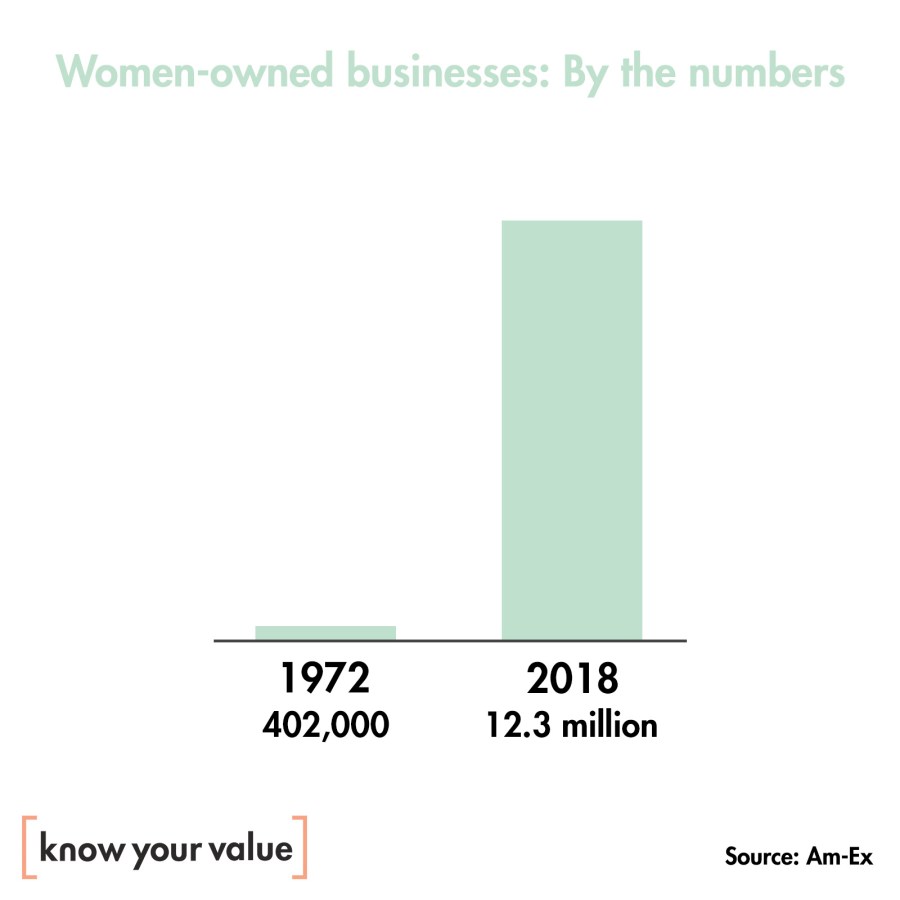
Women-owned businesses: By the numbers
An AmEx’s 2018 report revealed there were 12.3 million women-owned businesses in the U.S. last year, which represents 40 percent of all U.S. businesses. It’s an exponential increase from 1972 when there were only 402,000 women-owned businesses, which represented just 4.6 percent of all American businesses.
Women of color have been a major driver of this growth. The number of businesses they own soared by 163 percent between 2007 and 2018 – almost three times the rate of growth for women overall during the same period. They now own more than 5.8 million U.S. businesses, about 47 percent of the total for women overall.
But there’s a dark truth about the mainstream workplace behind those numbers: “From 2007 to 2018, higher unemployment rates, long-term unemployment and a much greater gender and racial pay gap led women of color to start businesses at a higher rate out of necessity and the need to survive, rather than a desire to seize a market opportunity,” the AmEx report said.
But even as the number of women-owned businesses grows, Minkoff pointed out that female founders received only 2.2 percent of the $85 billion that venture capitalists invested in startups in 2017. And overall, women are paid just 80 cents on the dollar compared to men (although other analyses peg it at even less). That’s why Minkoff hopes to see the Female Founder Collective seal inspire people to support women-owned businesses when deciding which coffee shop to pop into, or which product to buy at the grocery store. The collective also creates a network for women business owners and runs events for members that focus on training, business advice and more. “It could change the economic divide that much faster,” she said.
Julianne Pepitone
Julianne is the senior technology writer for NBC News Digital, covering large consumer tech companies' (Apple, Google, Facebook, etc.) news and trends, as well as cybersecurity. She also writes and appears in original videos for NBCNews.com, and speaks as an expert guest on live shows across the NBC and MSNBC networks.
She previously worked at CNNMoney.com where she covered large techs from a business angle, as well as the intersection of the tech and media industries.
In addition to NBC and CNN online properties, Julianne has written for several national magazines and online publications including Esquire, Self, Popular Mechanics and Cosmopolitan. Recommended


