








Iranian women have had enough. In a viral protest movement that has continued for weeks, women are marching, burning their hijabs and courageously protesting decades of repression and abuse. As the exiled activist Masih Alinejad once said, the hijab is like the Berlin Wall. “If we bring it down, the entire system will collapse.” Iranian women fight knowing that their freedom, equality, and power is fundamental to democracy — not just for them, but for all.
That’s true here in the U.S. too.
Simply put, vibrant democracy requires the full participation of women. They must have equal voice and power for democratic systems to thrive.

The United States has always stood as a beacon of democracy for the world and while in many ways we are, American democratic foundations have huge gaps where women’s rights should be. Women are not mentioned in the U.S. Constitution or any of our founding documents. And while 85 percent of the world’s nations enshrine the rights of women in their constitution, we do not. The 1979 Convention on the Elimination of Discrimination Against Women (CEDAW), known as ‘the international women’s bill of rights,” has been ratified by almost every country in the world. Two of the seven who have not signed it include the U.S. and Iran.
Repression of women and autocracy go hand in hand. Iran is in the headlines today, but there are other instructive examples. As Russian President Vladimir Putin rose in power, he put down political dissent and the rights of women. He decriminalized domestic violence and banned hundreds of professions from women’s participation. In Saudi Arabia, women pushing for freedoms have been jailed for speaking out on social media. Of course, the resurgent Taliban have built their power on brutally repressing women, banning them from school and most professions. Iranian Ayatollahs, Saudi royals, Russian Oligarchs and Taliban militants know that women’s freedom is a threat to them. As Harvard professors Erica Chenowith and Zoe Marks put it, “misogyny and authoritarianism are not just common comorbidities but mutually reinforcing ills.”
Conversely, the most gender equal nations, from Iceland to New Zealand, are among the most politically stable democracies. A recent study by Brookings concluded “higher levels of gender equality are strongly correlated with a nation’s relative state of peace, a healthier domestic security environment, and lower levels of aggression toward other states.”
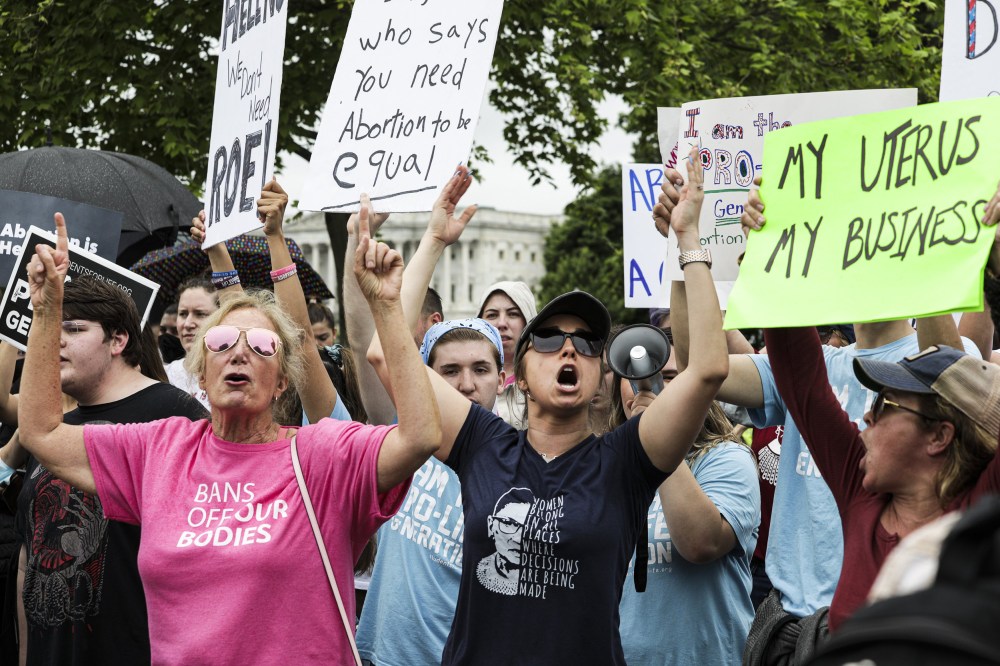
Will the U.S. progress or regress? The rollback of reproductive rights is an ominous sign. Women simply cannot be full and equal participants in democracy if they lack the autonomy to determine where, when, and how they have children, or worse face threats to their very lives because they cannot access critical medical care. The barriers erected in dozens of states after the fall of Roe present a clear and immediate danger to women’s freedom and power, individually and collectively.

That’s exactly why countries and states around the world have enshrined abortion rights for the exact purpose of advancing women’s power and equality. The only path forward now for the U.S. is to do the same in federal law, which should be an urgent priority for Democrats if they take the majority in November.
Other pillars of our democracy similarly require more urgent effort to address gender inequality. Our government may not black out social media like the Iranian regime has, but as the internet and social media have become the de-facto town square, free speech for women faces challenges here too. According to Pew Research Center, 61 percent of women say online harassment, including misogyny, bullying, blackmail and doxing, is a major problem. The White House recently established a taskforce to look at the issue, but legislation to create safety for women online is needed.
The enfranchisement of women has been and continues to be vital to keeping our system functional now and well into the future. But the U.S. lags the world on this front too; the World Economic Forum ranks the United States 38th globally for the political parity of women. Moreover, 59 other nations have elected a female head of state. The UK has just elected its third! Yet that possibility, even with a woman currently in the vice presidency, still seems remote here. And while there has been a surge in women running for office, they remain less than 30 percent of Congress and most State Houses. There are solutions – ranked choice voting, for one, has been a boon to women candidates and prioritizing support for recruiting, training, and funding women candidates makes a difference. In my work over the last decade training thousands of women across the country about the power of civic and political engagement, almost universally, those women chose to engage in our political process not for personal gain but to make things better for their families and communities. It’s not surprising then that women in elected office are more likely to forge compromise and find solutions across the aisle that advances the common good. That’s an opportunity. More women at every level of our political process creates the conditions for a more vibrant democracy. Unfortunately, we are far from realizing the full potential of women’s contributions. For decades, the U.S. has invested in supporting women’s rights movements around the world because we understood it was vital to our national interest. It’s time we strengthen our own democracy by prioritizing gender equality everywhere it lags. We must enact reforms like ranked choice voting that allow more women to run and win elected office. We also must codify abortion rights in federal law, ratify global conventions on women’s rights and call out systemic sexism everywhere it exists. The democratic ideal that so many around the world are fighting and dying for rests on the notion that all people deserve the right to self-determination, that they hold the power to make their nations better, more representative, more inclusive, more stable, more exemplary — one woman at a time. Lauren Leader is the Co-Founder and CEO of All In Together, a non-partisan women’s civic education organization. She tweets @LaurenLeaderAIT
Lauren Leader
Lauren Leader is the co-founder and CEO of All In Together. She is a frequent contributor to Know Your Value. She tweets @laurenleaderAIT Recommended


