








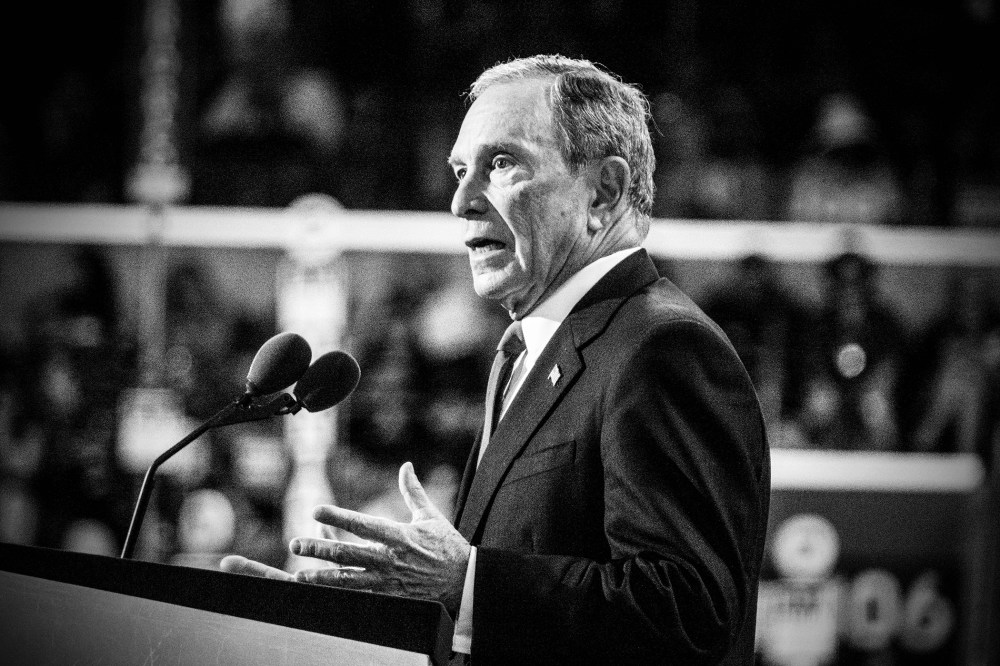

Former New York City Mayor Michael Bloomberg considered a presidential campaign in 2008. And 2012. And then again in 2016.
In each instance, things didn’t quite work out for the Republican-turned-independent-turned-Democrat, and six months ago, Bloomberg conceded that he wouldn’t be a candidate in the 2020 election cycle, either. “I believe I would defeat Donald Trump in a general election,” he wrote in column announcing his decision not to run. “But I am clear-eyed about the difficulty of winning the Democratic nomination in such a crowded field.”
Evidently, the former mayor now sees a different landscape through those clear eyes.
Former New York City mayor Michael Bloomberg is positioning himself to enter the Democratic presidential primary, a longtime Bloomberg adviser confirmed to NBC News Thursday, though he has not yet made a final decision.
“Yes and yes,” Kevin Sheekey wrote in an email responding to the questions about whether Bloomberg, 77, a billionaire businessman, was preparing to run and collecting signatures in Alabama, moves first reported by The New York Times on Thursday afternoon.
The Alabama angle may seem unexpected — it’s a ruby-red state that is unlikely to play a major role in the election — but it’s the state with the earliest filing deadline. In fact, that deadline is today, which is why, as the New York Times‘ report put it, Bloomberg is “expected to file paperwork this week designating himself as a candidate in at least one state.” (The filing deadline in New Hampshire is a week from today, and by any fair measure, it’s of greater electoral importance.)
According to the former mayor’s spokesperson, Howard Wolfson, Bloomberg’s principal concern is that the current field of Democratic presidential hopefuls isn’t strong enough to defeat Donald Trump, which apparently led Bloomberg to reconsider his decision.
Complicating matters, he’s not alone: the Washington Post‘s Eugene Robinson noted late yesterday that he spoke to a reliable source who told him former Attorney General Eric Holder “has been consulting strategists” about also possibly jumping into the 2020 presidential race.”
So, let’s take stock.
Right off the bat, the idea that the current field of Democratic presidential hopefuls appears likely to struggle in a general election is suspect. It was, after all, just this week that several national polls found Trump trailing the top Democratic candidates by margins ranging from 8 to 17 points.
If those numbers were reversed, and the Republican enjoyed healthy leads, the rationale for a “white knight” to storm in and rescue the party from a likely defeat would be more compelling. But that’s not the case.
The next question is whether it’s reasonable to expect Bloomberg to find a sizable number of Democratic primary voters who’d rally behind him. The New Yorker certainly has greater name recognition than the billionaire who’s already running for the Democratic nomination — hello, Tom Steyer — but it’s not unreasonable to be skeptical of Bloomberg’s chances. Age is a consideration — Bloomberg is nine months older than Joe Biden, and only five months younger than Bernie Sanders — as is the fact that Bloomberg, in the not-too-distant past, was a Republican who helped elect George W. Bush to the White House. In New York City, he never even competed in a Democratic primary. It’s also easy to imagine much of the Democratic base being suspicious of a billionaire jumping into the race, late in the game, using his resources to get ahead. Finally, we recently kicked around the many problems “white knight” candidates face, which is why they nearly always fall short. I know better than to make categorical predictions, and one look at the Oval Office serves as a reminder than unexpected things can and do happen in electoral politics. But given everything we know, the odds are not in Bloomberg’s — or any other possible 11th-hour candidates’ — favor.
Steve Benen is a producer for "The Rachel Maddow Show," the editor of MaddowBlog and an MS NOW political contributor. He's also the bestselling author of "Ministry of Truth: Democracy, Reality, and the Republicans' War on the Recent Past." Recommended


