








Donald Trump’s latest White House budget, unveiled two months ago, urged Congress to strip the Special Olympics of all of its federal funding and nearly all of the money going toward the Great Lakes Restoration Initiative. Both of those efforts soon after became controversial, and lawmakers were prepared to ignore the recommendations.
Nevertheless, the president, eager to once again claim credit for cleaning up a mess he made, boasted on Twitter yesterday that he’s “officially updated” his budget blueprint to reflect his newfound support for the programs that he tried to gut in March.
But it was Trump’s other budget move that struck me as even more notable.
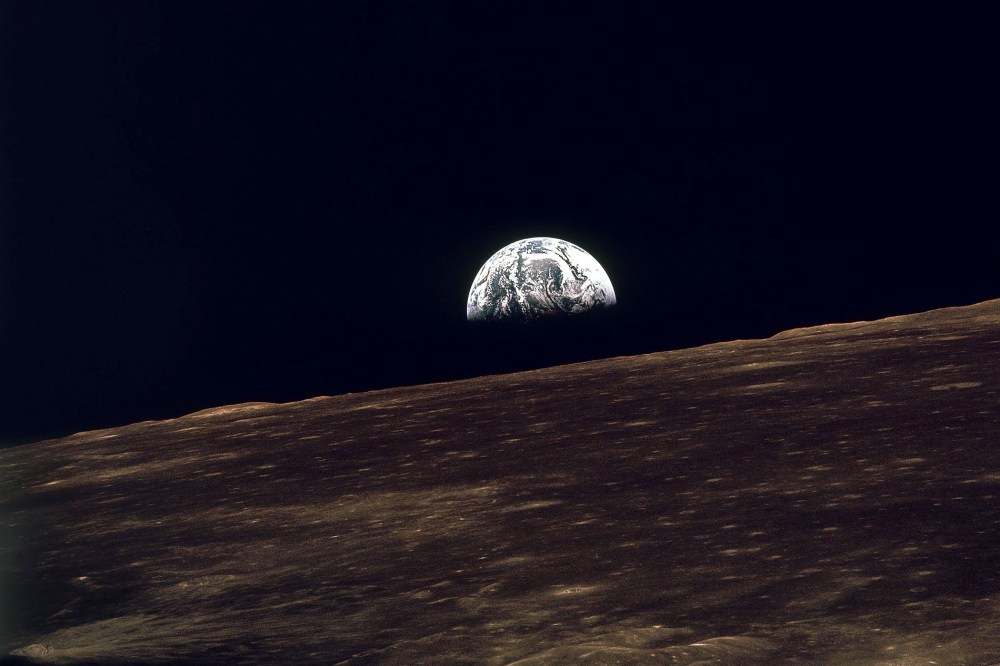
The White House is asking Congress for an additional $1.6 billion for NASA’s budget next year as the space agency attempts to return humans to the moon by 2024.
The announcement comes about six weeks after Vice President Pence called for an accelerated program to return humans to the lunar surface for the first time since the last Apollo lunar landing in 1972. But since the White House issued that bold mandate, NASA has released few details about how it would achieve it or what the program would cost.
The president wrote — again via Twitter — that he’s updating the White House budget “to include an additional $1.6 billion so that we can return to Space in a BIG WAY!”
Trump wants the $1.6 billion to come from surplus funds in the Pell Grant program, which is used to help low-income students pay college tuition. The Office of Management and Budget claimed the shift would not cut student aid.
All of this is a point of continuing interest because the president seems determined to send Americans to the surface of the moon while he’s in office, though he doesn’t necessarily know why. Or how. Or at what cost.
As we discussed last month, Vice President Mike Pence delivered a speech on “Space Policy Directive-1,” which is Trump’s directive to NASA for lunar exploration. Pence added in his remarks that he’d learned, five minutes before reaching the podium, that officials “now have a plan” to return to the moon by 2024. There was no actual plan. NASA had hoped to return to the moon by 2028, but that’s not fast enough for Trump, since he’ll leave office in January 2025 at the latest. NASA responded to the White House directive by “scrambling” to satisfy Trump’s request. Evidently, the first order of business is getting more money, which led to yesterday’s presidential announcement. The second order of business is hoping NASA somehow figures something out. It’s hard to believe $1.6 billion would make the larger mission possible, so even if Congress agrees, it’s probably going to be a down payment.
Steve Benen is a producer for "The Rachel Maddow Show," the editor of MaddowBlog and an MS NOW political contributor. He's also the bestselling author of "Ministry of Truth: Democracy, Reality, and the Republicans' War on the Recent Past." Recommended


