








As I write this, journalist Kathy Gannon is being medevaced from the southeastern province of Khost in Afghanistan, to an airport in Kabul. She and her colleague, photographer Anja Niedringhaus, both working for the Associated Press, had been covering election preparations there when they were shot.
The two had been traveling with an election convoy delivering ballots to the Tani district outside of Khost city. They were sitting in their car, waiting for the convoy to move, when a police lieutenant named Naqibullah walked up, yelled “God is great,” and opened fire. The lieutenant turned himself in. His motives may have been a reprisal for a U.S. air strike in his hometown of Parwan earlier this year. Niedringhaus died immediately. Gannon was taken to the provincial hospital and received treatment there.
My morning was spent on the phone, relaying information, passing on phone numbers and trying to make sure that Gannon, a veteran journalist beloved by many, would make it back to safety. After the flurry of phone calls, when I had done everything I knew how to do, I cradled my face in the palms of my hands and wept.
It wasn’t just for Niedringhaus, whose chronicling of life in Afghanistan had inspired the work of many young photographers. The incident in Khost was the third attack on journalists in less than a month. The Swedish-British radio journalist Nils Horner was shot in cold blood, in broad daylight, while investigating a story in Kabul’s affluent enclave of Wazir Akbar Khan. Sardar Ahmad, a respected reporter with the Agence France-Presse bureau in Kabul, was killed with his wife and two children at the upscale Serena Hotel. Only the two-year-old, shot in the head, survived.
The Taliban promised earlier in the campaign season to undermine the political transition, and so far, they have made good on that promise. In the past two weeks, the Afghan election commission has been attacked twice. Gunmen have stormed a foreigner guesthouse. The well-guarded interior ministry was targeted, killing six. The spate of attacks has become common enough that now, for an attack to be noticed, it has to be truly spectacular.
The insurgents have been targeting Westerners, whose deaths make international headlines, but the steady drumbeat of violence is louder for Afghans. The deaths that do not get attention are too many to name. Headlines on Pajhwok, a local news agency, tell the story:
“Election runner kidnapped in Sar-i-Pul”
“4 campaigners of a candidate killed in Paktia”
“Kunduz roadside bombing leaves 8 dead”
“Logar suicide attack leaves policeman dead”
“Security men among 24 killed in Sar-i-Pul offensive”
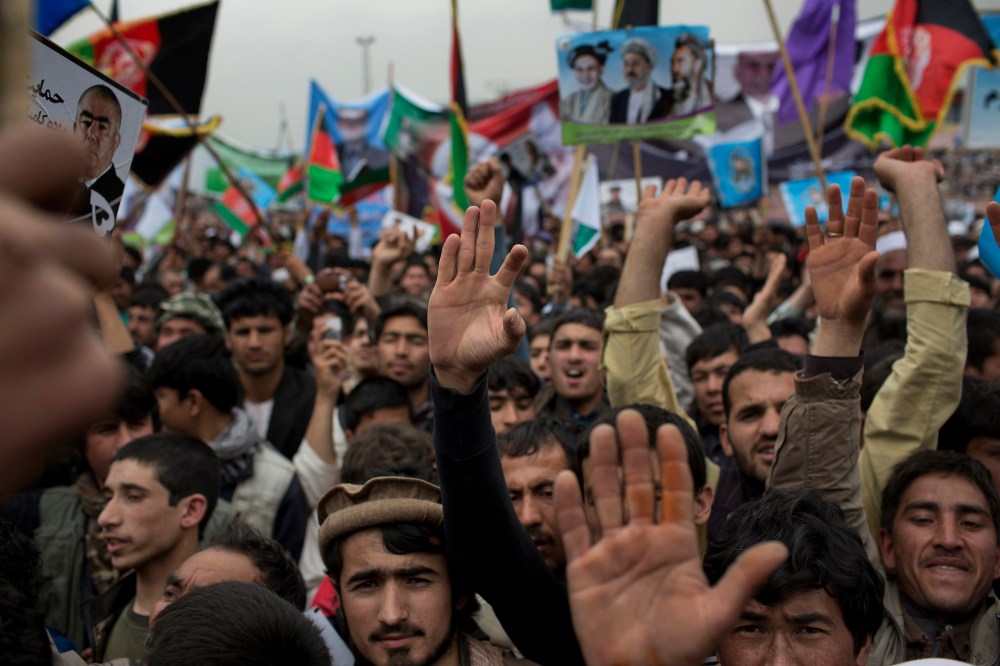
And that is just in one day. We forget that in between the major headlines lay scores of smaller tragedies, undetected by the world, but privately mourned nonetheless. The trauma that Westerners such as myself catch glimpses of on our worst days is the stuff of everyday existence for most Afghans. It is possible, I hope, to remind the world of this fact – the wider context in which Niedringhaus, Ahmad and Horner died – without diminishing their passing in any way. It is difficult to write about the security situation in Afghanistan, mainly because no one knows what will happen. It isn’t as bad as it was in 2009, when Taliban attacked the presidential palace, in the heart of the capital, and a commercial bank. The government hasn’t banned journalists from reporting on Election Day, as they did then, amid fears that coverage of the daily violence would depress morale. And yet, the mood is somber. Escalating violence has driven observer missions out of the country. While their number, less than 200, was too small to have made a difference, their absence significantly changes the tone of the debate. The few who remain will be monitoring the elections from the confines of their compounds. As a result, the veracity of any claims of fraud — which seem inevitable — will be questioned. This undermines the legitimacy of the fledgling election process, and threatens to extend a period of instability that Afghanistan cannot afford. Some voters I spoke with worry that the interest of the international community has dwindled, and that this may mean increased possibilities for fraud. Others, mainly urban voters, are determined to cast their ballots. Those in the rural areas, for whom elections have never meant much, remain ambivalent. It is not possible to generalize in a country so bifurcated. The near devotional mania you see in rallies around the country, in provincial capitals and Kabul, do not reflect the reality of village life — just as the cavalier attitude toward fraud that I have witnessed traveling to remote areas of Wardak, just an hour’s drive from Kabul, do not reflect the mood in the capital. But Afghans are known for their resilience. When they head to the polls, voters have a shot at achieving the first peaceful transition of power in Afghanistan since 1901. And when that happens, we reporters will be there to document it. May Jeong is a Kabul-based reporter. Her work has appeared in the New York Times, Slate and other publications.
May Jeong Recommended


