








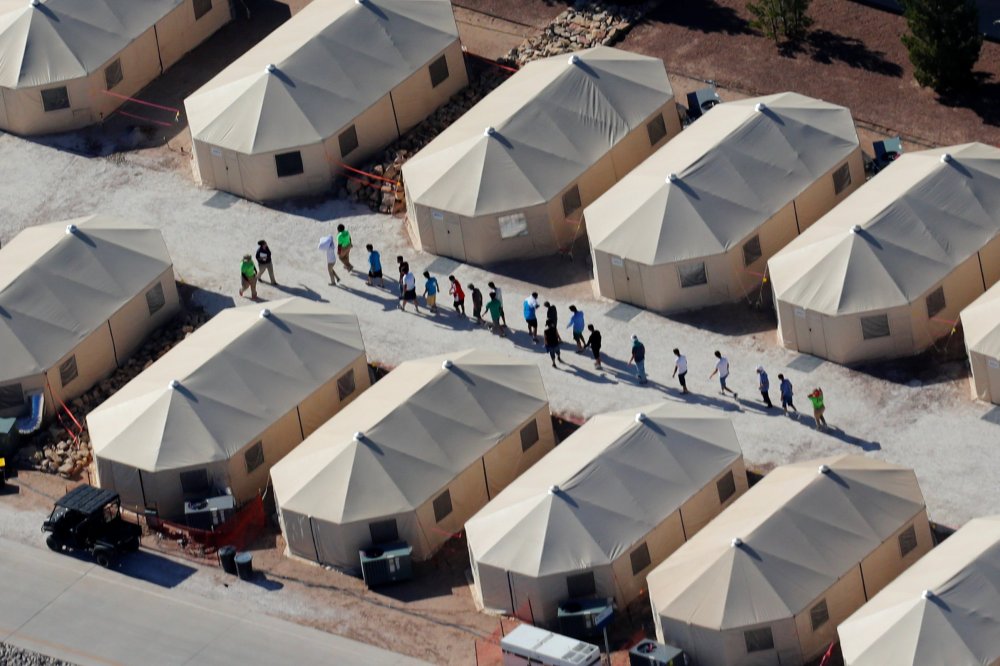
Just when it seemed Donald Trump’s family separation policy couldn’t look worse, we’re confronted with a new report from Department of Health and Human Services’ inspector general’s office. Not only did the Trump administration separate thousands more immigrant children from their parents than we previously knew, but as NBC News reported, whether those families have been reunified is unknown,
The report found a spike in immigrant family separations beginning in the summer of 2017, a year prior to the “zero tolerance” policy that prosecuted immigrant parents who crossed the border illegally while holding their children separately in HHS custody. The families separated under zero tolerance were represented in a class action lawsuit, where a federal judge ordered that the government reunify them.
However, the government had no such order to reunify children separated prior to “zero tolerance.” Some may have been released to family or nonrelative sponsors, but it is not known how many have been reunified.
HHS officials did not keep track of whether children they were releasing from their custody had been separated from their parents at the border or whether they crossed the border without a parent.
Just how many families are at issue? No one seems able to say for sure, and both the report and an HHS spokesperson said the department has faced “challenges in identifying separated children.”
They didn’t know what they were doing, and they did it badly.
Indeed, all of this comes just three months after a related report from the inspector general’s office inside the Department of Homeland Security.
DHS was not fully prepared to implement the Administration’s Zero Tolerance Policy or to deal with some of its after-effects. Faced with resource limitations and other challenges, DHS regulated the number of asylum-seekers entering the country through ports of entry at the same time that it encouraged asylum-seekers to come to the ports. During Zero Tolerance, CBP also held alien children separated from their parents for extended periods in facilities intended solely for short-term detention.
DHS also struggled to identify, track, and reunify families separated under Zero Tolerance due to limitations with its information technology systems, including a lack of integration between systems.
Recommended


Finally, DHS provided inconsistent information to aliens who arrived with children during Zero Tolerance, which resulted in some parents not understanding that they would be separated from their children, and being unable to communicate with their children after separation.
A central database to track separated families did not exist.
A Washington Post analysis added, “The report is at once confirmation that the Trump administration proactively elected to implement this policy — contradicting its public pronouncements — and shows that the policy itself was highly premature and poorly carried out. It’s a triple-whammy of an indictment of the administration’s actions, courtesy of an internal review by the administration itself. And it describes an administration that wasn’t honest about its policy throughout.”
It was last June when Homeland Security Secretary Kirstjen Nielsen declared via Twitter, “We do not have a policy of separating families at the border. Period.”
It’s a quote that hasn’t improved with age.
Steve Benen is a producer for "The Rachel Maddow Show," the editor of MaddowBlog and an MS NOW political contributor. He's also the bestselling author of "Ministry of Truth: Democracy, Reality, and the Republicans' War on the Recent Past."
