








The Secure Elections Act wasn’t the year’s highest-profile bill in Congress, perhaps because the debate over its merits wasn’t especially partisan. The legislation had bipartisan support in the Senate, and tackled an issue that isn’t overtly political: it was intended to strengthen U.S. defenses against election interference.
Yahoo News summarized the bill’s key provisions:
As it currently stands, the legislation would grant every state’s top election official security clearance to receive threat information. It would also formalize the practice of information-sharing between the federal government — in particular, the Department of Homeland Security—and states regarding threats to electoral infrastructure. A technical advisory board would establish best practices related to election cybersecurity.
Perhaps most significantly, the law would mandate that every state conduct a statistically significant audit following a federal election. It would also incentivize the purchase of voting machines that leave a paper record of votes cast, as opposed to some all-electronic models that do not.
The entire effort appeared to be on track for pre-election approval, right up until this week, when the Senate Rules Committee unexpectedly canceled a markup.
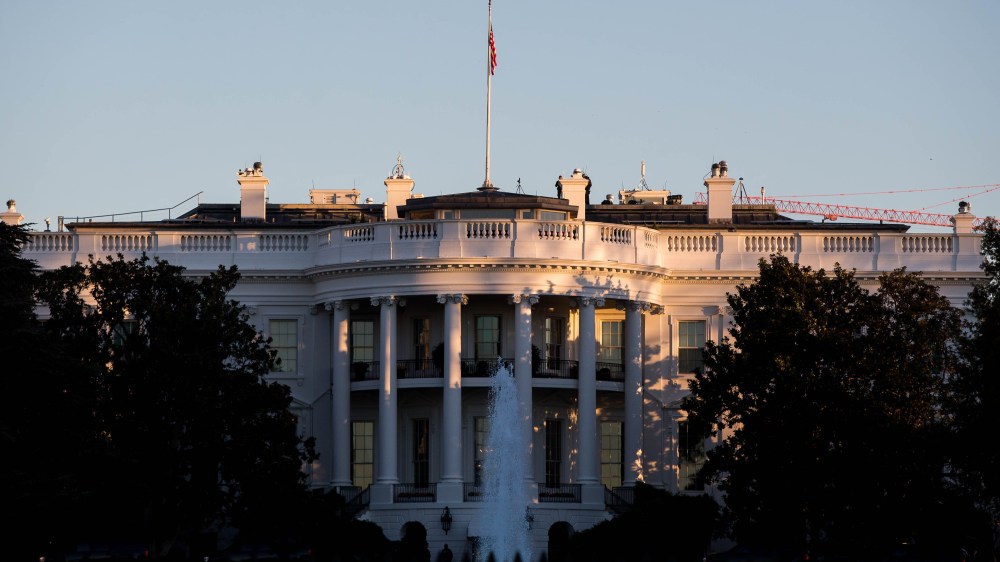
So what happened? According to the Yahoo News account, the Trump White House signaled its opposition to the bipartisan bill.
A White House spokesperson said in a statement that while the administration “appreciates Congress’s interest in election security, [the Department of Homeland Security] has all the statutory authority it needs to assist state and local officials to improve the security of existing election infrastructure.” It’s worth emphasizing that there’s some disagreement over the behind-the-scenes wrangling, and Sen. James Lankford (R-Okla.), one of the bill’s principal sponsors, has expressed optimism that the Secure Elections Act may yet advance. But as a Vox piece noted yesterday, it’s “not a good look to squash a bill” that could potentially stop foreign adversaries from interfering in our elections. Vox’s Alex Ward added, “It’s unclear if the bill is forever dead or if it will be considered again, either in its current or different form. But it goes to show that the White House doesn’t seem to take its interest in election security extremely seriously — all because of the man who sits in the Oval Office.”
Steve Benen is a producer for "The Rachel Maddow Show," the editor of MaddowBlog and an MS NOW political contributor. He's also the bestselling author of "Ministry of Truth: Democracy, Reality, and the Republicans' War on the Recent Past." Recommended


